EPUB · English
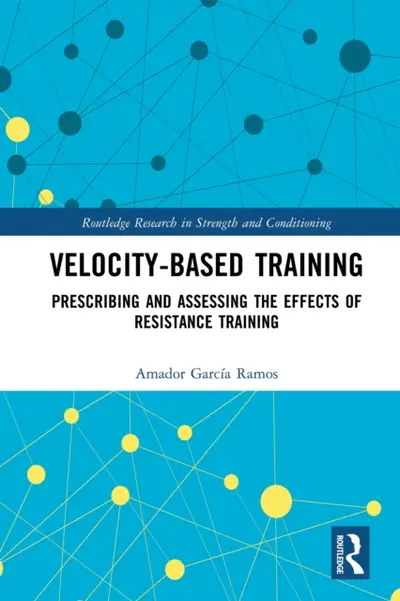
Velocity-Based Training
Prescribing and Assessing the Effects of Resistance Training
Price and availability
$58.99
Available in: Andorra, Austria, Australia, Belgium, Bulgaria, Canada, Switzerland, Cyprus, Czechia, Germany, Denmark, Estonia, Spain, Finland, France, United Kingdom, Guernsey, Greece, Croatia, Hungary, Ireland, Isle of Man, Iceland, Italy, Jersey, Japan, Liechtenstein, Lithuania, Luxembourg, Latvia, Monaco, Malta, Netherlands, Norway, Poland, Portugal, Romania, Sweden, Slovenia, Slovakia, San Marino, United States, Vatican City, South Africa
Stores: US, UK, Canada, EU, Australia.
Sign in to buyThe price is re-checked by the server before payment.
For personal use under the eBook licence.
- Format
- EPUB
- DRM
- Not stated by the publisher
- Language
- English
- Publisher
- Taylor & Francis
- Published
- 8 April 2025
- ISBN
- 9781040318713
- Subjects
- Biomechanics, human kinetics, Family & health, Sports & outdoor recreation, Sports training & coaching, Sport science, physical education, Sport science, physical education
About this book
Velocity-based training (VBT) is a contemporary method of resistance training (RT) that has become popular among sport scientists and practitioners due to the proliferation of devices that allow accurate real-time monitoring of movement velocity during RT exercises. The main input of VBT is the lifting velocity of repetitions performed with maximal intent (i.e., executed as fast as possible). Barbell's velocity monitoring is known to have important applications for (I) enhancing training quality, (II) prescribing RT intensities and volumes, and (III) assessing day-to-day physical readiness and training-induced neuromuscular adaptations. Velocity Based Training looks to describe how movement velocity can be used as a supplement to or replacement for more traditional methods commonly used to prescribe RT and assess its effects on neuromuscular function This new volume thoroughly examines the scientific literature related to VBT. Consisting of 15 chapters that have been distributed in 5 sections covering the main topics of VBT. In each section the reader is presented with (I) the importance of the topic, (II) the investigations that have contributed to the development of the topic, (III) guidelines for applying the scientific knowledge in practice, and (IV) scientific gaps that need to be addressed for a more accurate implementation of VBT. The key audience for this book are academic researchers and postgraduate students interested in the field of strength training and conditioning. Practitioners or emerging practitioners in the field of sport and kinesiology could also benefit from this book as it provides research-based guidelines that facilitate the implementation of individualized VBT programs in real-world training settings.
Bibliographic data © Gardners Books Ltd.