EPUB · English
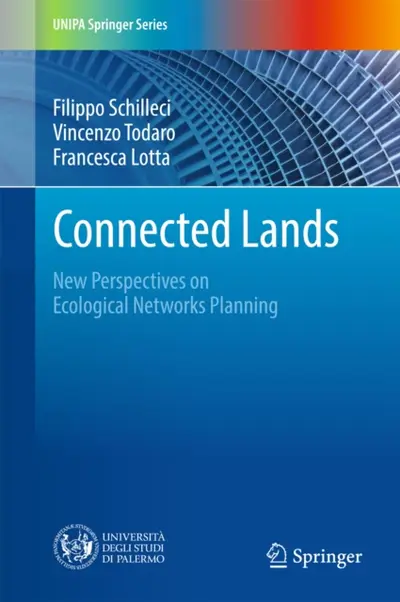
Connected Lands
New Perspectives on Ecological Networks Planning
Price and availability
$120.99
Available in: Andorra, Austria, Australia, Belgium, Bulgaria, Canada, Switzerland, Cyprus, Czechia, Germany, Denmark, Estonia, Spain, Finland, France, United Kingdom, Guernsey, Greece, Croatia, Hungary, Ireland, Isle of Man, Iceland, Italy, Jersey, Japan, Liechtenstein, Lithuania, Luxembourg, Latvia, Monaco, Malta, Netherlands, Norway, Poland, Portugal, Romania, Sweden, Slovenia, Slovakia, San Marino, United States, Vatican City, South Africa
Stores: US, UK, Canada, EU, Australia.
Sign in to buyThe price is re-checked by the server before payment.
For personal use under the eBook licence.
- Format
- EPUB
- DRM
- Not stated by the publisher
- Language
- English
- Publisher
- Springer International Publishing
- Published
- 20 April 2017
- ISBN
- 9783319552330
- Subjects
- Urban communities, Sociology, Ecological science, the Biosphere, Conservation of the environment, Urban communities / city life, Sociology, Ecological science, the Biosphere, Conservation of the environment
About this book
This book explores and outlines the reference theoretical basis of ecological networks within the international debate, focusing on how protected areas should no longer be considered as the sum of different components but rather as a network. The various European, transnational and national models of ecological networks/connections are analyzed on the basis of a detailed, updated study of relevant documents. The complex picture that emerges shows a wide range of reticular-ecological models within European plans and programs, but also many non-integrated experiences. The book subsequently examines the regulation of ecological networks/connections within planning instruments, explaining the critical points and referring to different ecological network models and specific local realities. Lastly, the book addresses two Italian case studies regarding the different normative and planning frameworks, both at a national and regional level, and demonstrating not only how ecological networks/connections can be structured within plans, but also how these networks/connections represent the core element of territory development and preservation. As such, it provides an essential tool for containing habitat fragmentation, offering a new perspective that integrates theoretical approaches and methods with planning models and the lessons learned from local applications.
Bibliographic data © Gardners Books Ltd.