EPUB · Slovenian
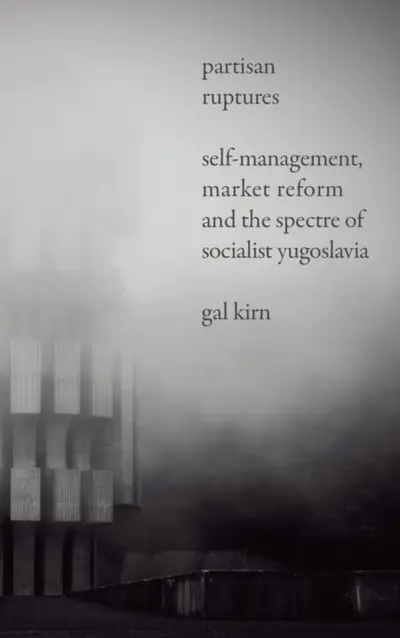
Partisan Ruptures
Self-Management, Market Reform and the Spectre of Socialist Yugoslavia
Price and availability
$33.99
Available in: Andorra, Austria, Australia, Belgium, Bulgaria, Canada, Switzerland, Cyprus, Czechia, Germany, Denmark, Estonia, Spain, Finland, France, United Kingdom, Guernsey, Greece, Croatia, Hungary, Ireland, Isle of Man, Iceland, Italy, Jersey, Japan, Liechtenstein, Lithuania, Luxembourg, Latvia, Monaco, Malta, Netherlands, Norway, Poland, Portugal, Romania, Sweden, Slovenia, Slovakia, San Marino, United States, Vatican City, South Africa
Stores: US, UK, Canada, EU, Australia.
Sign in to buyThe price is re-checked by the server before payment.
For personal use under the eBook licence.
- Format
- EPUB
- DRM
- Not stated by the publisher
- Language
- Slovenian
- Publisher
- Pluto Press
- Published
- 20 December 2019
- ISBN
- 9781786805362
- Subjects
- Yugoslavia & former Yugoslavia, 20th century, European history, 20th century history: c 1900 to c 2000, Revolutions, uprisings, rebellions, Military history, Second World War, Marxism & Communism, Revolutionary groups & movements, Yugoslavia, Far-left political ideologies and movements, Planned economic systems, European history, Revolutions, uprisings, rebellions, Civil wars
About this book
Yugoslavia's twentieth-century bore witness to civil war, sharp ideological struggles and a series of 'partisan ruptures'; revolutionary events that changed the face of Yugoslavian society, politics and culture, which were felt on a global level. This book is a comprehensive historical and political analysis of the three major ruptures; the People's Liberation Struggle during World War Two, the self-management model and the Non-Aligned Movement. In order to understand what provoked and what came out of these revolutionary ruptures, Gal Kirn examines the implications of communism and socialism's productive relationship, the Yugoslavian 'experiment' of market socialism that marked the political and economic shift towards 'post-socialism' already in the 1960s, which crystallised new class coalitions that will later on - together with austerity politics - lead the way towards des-integration of Yugoslavia. Filling a much-needed gap in English language literature, this book's interrogation of the Yugoslav socialist experiment offers insights for left projects and democratic socialist discussions today, as well as historians of Yugoslavia and revolutionary movements.
Bibliographic data © Gardners Books Ltd.