EPUB · English
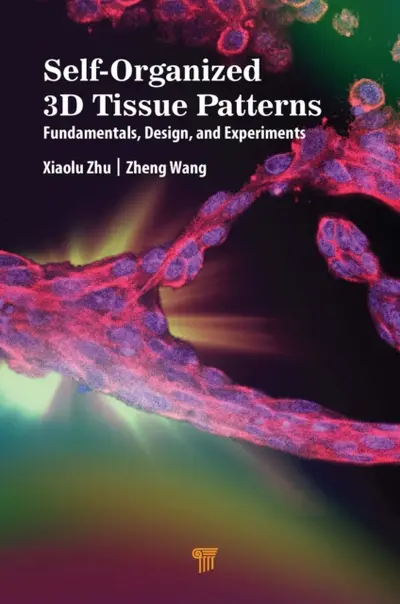
Self-Organized 3D Tissue Patterns
Fundamentals, Design, and Experiments
Price and availability
$135.99
Available in: Andorra, Austria, Australia, Belgium, Bulgaria, Canada, Switzerland, Cyprus, Czechia, Germany, Denmark, Estonia, Spain, Finland, France, United Kingdom, Guernsey, Greece, Croatia, Hungary, Ireland, Isle of Man, Iceland, Italy, Jersey, Japan, Liechtenstein, Lithuania, Luxembourg, Latvia, Monaco, Malta, Netherlands, Norway, Poland, Portugal, Romania, Sweden, Slovenia, Slovakia, San Marino, United States, Vatican City, South Africa
Stores: US, UK, Canada, EU, Australia.
Sign in to buyThe price is re-checked by the server before payment.
For personal use under the eBook licence.
- Format
- EPUB
- DRM
- Not stated by the publisher
- Language
- English
- Publisher
- Taylor and Francis Group
- Published
- 25 May 2022
- ISBN
- 9781000400847
- Subjects
- Medical equipment & techniques, Biomedical engineering, Mathematics, Materials science, Biomedical engineering / Medical engineering, Mathematical modelling, Materials science
About this book
Therapies for regenerating damaged tissue and organs have been attracting much attention. In order to efficiently regenerate the functions of living tissue and organs, diverse attempts have been made to utilize scaffolds to a molda artificial tissue structures. However, the structural complexity of reconstituted tissue is limited by the mechanical precision of scaffolds, which still cause problems arising from their degradation, immunogenic reactions, and so forth. It is also being realized that ultimately the best approach might be to rely on the innate self-organizing properties of cells and the regenerative capability of the organism itself.This book investigates the 3D-pattern formation and evolution mechanism in multipotent cells embedded in 3D semi-synthetic hydrogels and the control methodology for self-organized patterns. The authors theoretically and experimentally demonstrate several types of topological 3D-pattern formation by cells in a 3D matrix in vitro, which can be modeled and predicted by mathematical models based on the reaction-diffusion dynamics of various chemical, physical, and mechanical cues. The study, focused on the 3D pattern formation of cells, provides (i) a unique perspective for understanding the self-organized 3D tissue structures based on Turing instability, (ii) the scheme for rationally controlling the cellular self-organization via exogenous factors or tailored inner interfaces inside hydrogels, and (iii) the elaborate and sophisticated regulating method for tuning collective cellular behaviors in 3D matrices.
Bibliographic data © Gardners Books Ltd.