EPUB · English
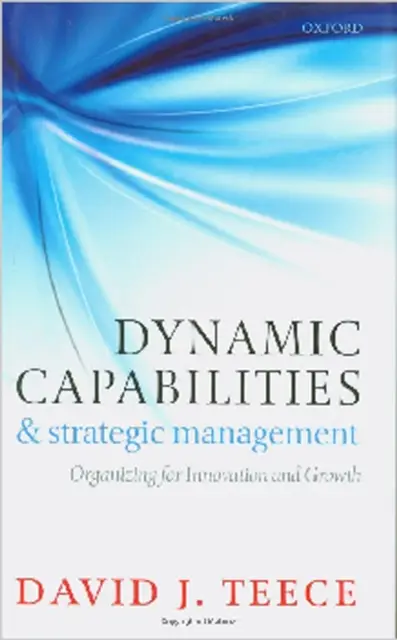
Dynamic Capabilities and Strategic Management
Organizing for Innovation and Growth
Price and availability
$32.99
Available in: Andorra, Austria, Australia, Belgium, Bulgaria, Canada, Switzerland, Cyprus, Czechia, Germany, Denmark, Estonia, Spain, Finland, France, United Kingdom, Guernsey, Greece, Croatia, Hungary, Ireland, Isle of Man, Iceland, Italy, Jersey, Japan, Liechtenstein, Lithuania, Luxembourg, Latvia, Monaco, Malta, Netherlands, Norway, Poland, Portugal, Romania, Sweden, Slovenia, Slovakia, San Marino, United States, Vatican City, South Africa
Stores: US, UK, Canada, EU, Australia.
Sign in to buyThe price is re-checked by the server before payment.
For personal use under the eBook licence.
- Format
- EPUB
- DRM
- Not stated by the publisher
- Language
- English
- Publisher
- OUP Oxford
- Published
- 26 March 2009
- ISBN
- 9780191609312
- Subjects
- Economics of industrial organisation, Business strategy, Business innovation, Management & management techniques, Economics of industrial organization, Business strategy
About this book
How do firms compete? How do firms earn above normal returns? What's needed to sustain superior performance long term? An increasingly powerful answer to these fundamental questions of business strategy lies in the concept of dynamic capabilities. These are the skills, processes, routines, organizational structures, and disciplines that enable firms to build, employ, and orchestrate intangible assets relevant to satisfying customer needs, and which cannot be readily replicated by competitors. Enterprises with strong dynamic capabilities are intensely entrepreneurial. They not only adapt to business ecosystems; they also shape them through innovation, collaboration, learning, and involvement. David Teece was the pioneer of the dynamic capabilities perspective. It is grounded in 25 years of his research, teaching, and consultancy. His ideas have been influential in business strategy, management, and economics, and are relevant to innovation, technology management, and competition policy. Through his consultancy and advisory work he has also brought these ideas to bear in business and policy making around the world. This book is the clearest and most succinct statement of the core ideas of dynamic capabilities. Teece explains their genesis, application, and how they offer an alternative approach to much conventional strategic thinking grounded in simplistic and outdated understandings of industrial organizations and the foundations of competitive advantage. Accessibly written and presented, it will be an invaluable and stimulating tool for all those who want to understand this important contribution to strategic thinking, be they MBA students, academics, managers, or consultants.
Bibliographic data © Gardners Books Ltd.