EPUB · English
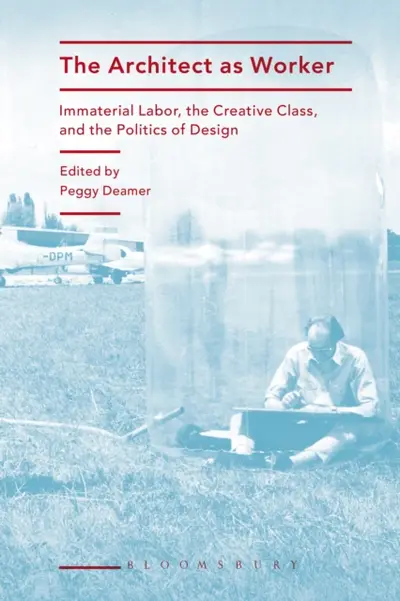
Architect as Worker
Immaterial Labor, the Creative Class, and the Politics of Design
Price and availability
$31.99
Available in: Andorra, Austria, Australia, Belgium, Bulgaria, Canada, Switzerland, Cyprus, Czechia, Germany, Denmark, Estonia, Spain, Finland, France, United Kingdom, Guernsey, Greece, Croatia, Hungary, Ireland, Isle of Man, Iceland, Italy, Jersey, Japan, Liechtenstein, Lithuania, Luxembourg, Latvia, Monaco, Malta, Netherlands, Norway, Poland, Portugal, Romania, Sweden, Slovenia, Slovakia, San Marino, United States, Vatican City, South Africa
Stores: US, UK, Canada, EU, Australia.
Sign in to buyThe price is re-checked by the server before payment.
For personal use under the eBook licence.
- Format
- EPUB
- DRM
- Not stated by the publisher
- Language
- English
- Publisher
- Bloomsbury Publishing
- Published
- 30 July 2015
- Pages
- 256
- ISBN
- 9781472570512
- Subjects
- Architecture, Theory of architecture, Architecture: professional practice, Architecture, Theory of architecture, Architecture: professional practice
About this book
Directly confronting the nature of contemporary architectural work, this book is the first to address a void at the heart of architectural discourse and thinking. For too long, architects have avoided questioning how the central aspects of architectural practice (professionalism, profit, technology, design, craft, and building) combine to characterize the work performed in the architectural office. Nor has there been a deeper evaluation of the unspoken and historically-determined myths that assign cultural, symbolic, and economic value to architectural labor.The Architect as Worker presents a range of essays exploring the issues central to architectural labor. These include questions about the nature of design work; immaterial and creative labor and how it gets categorized, spatialized, and monetized within architecture; the connection between parametrics and BIM and labor; theories of architectural work; architectural design as a cultural and economic condition; entrepreneurialism; and the possibility of ethical and rewarding architectural practice. The book is a call-to-arms, and its ultimate goal is to change the practice of architecture. It will strike a chord with architects, who will recognize the struggle of their profession; with students trying to understand the connections between work, value, and creative pleasure; and with academics and cultural theorists seeking to understand what grounds the discipline.
Bibliographic data © Gardners Books Ltd.