PDF · English
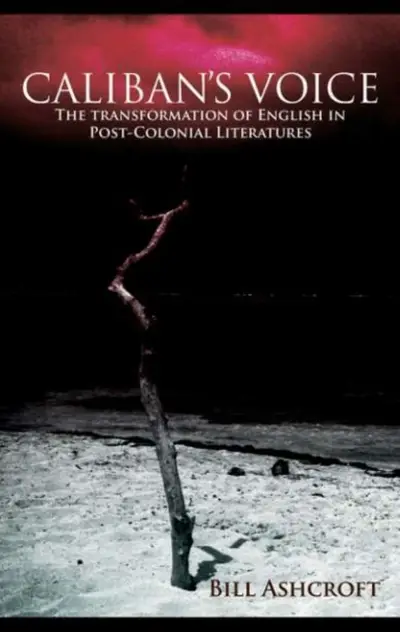
Caliban's Voice
The Transformation of English in Post-Colonial Literatures
Price and availability
$59.99
Available in: Andorra, Austria, Australia, Belgium, Bulgaria, Canada, Switzerland, Cyprus, Czechia, Germany, Denmark, Estonia, Spain, Finland, France, United Kingdom, Guernsey, Greece, Croatia, Hungary, Ireland, Isle of Man, Iceland, Italy, Jersey, Japan, Liechtenstein, Lithuania, Luxembourg, Latvia, Monaco, Malta, Netherlands, Norway, Poland, Portugal, Romania, Sweden, Slovenia, Slovakia, San Marino, United States, Vatican City, South Africa
Stores: US, UK, Canada, EU, Australia.
Sign in to buyThe price is re-checked by the server before payment.
For personal use under the eBook licence.
- Format
- DRM
- Not stated by the publisher
- Language
- English
- Publisher
- Taylor & Francis
- Published
- 21 January 2009
- ISBN
- 9781134030071
- Subjects
- Literary studies: general, Sociolinguistics, Comparative literature
About this book
In Shakespeare's Tempest, Caliban says to Miranda and Prospero: "e;...you taught me language, and my profit on't Is, I know how to curse. "e;With this statement, he gives voice to an issue that lies at the centre of post-colonial studies. Can Caliban own Prospero's language? Can he use it to do more than curse?Caliban's Voice examines the ways in which post-colonial literatures have transformed English to redefine what we understand to be 'English Literature'. It investigates the importance of language learning in the imperial mission, the function of language in ideas of race and place, the link between language and identity, the move from orature to literature and the significance of translation. By demonstrating the dialogue that occurs between writers and readers in literature, Bill Ashcroft argues that cultural identity is not locked up in language, but that language, even a dominant colonial language, can be transformed to convey the realities of many different cultures. Using the figure of Caliban, Ashcroft weaves a consistent and resonant thread through his discussion of the post-colonial experience of life in the English language, and the power of its transformation into new and creative forms.
Bibliographic data © Gardners Books Ltd.