PDF · English
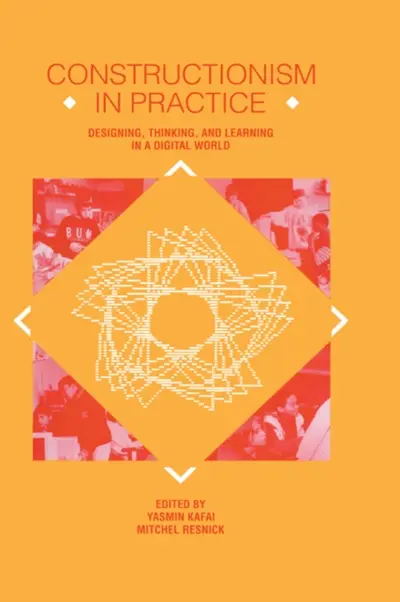
Constructionism in Practice
Designing, Thinking, and Learning in A Digital World
Price and availability
$78.99
Available in: Andorra, Austria, Australia, Belgium, Bulgaria, Canada, Switzerland, Cyprus, Czechia, Germany, Denmark, Estonia, Spain, Finland, France, United Kingdom, Guernsey, Greece, Croatia, Hungary, Ireland, Isle of Man, Iceland, Italy, Jersey, Japan, Liechtenstein, Lithuania, Luxembourg, Latvia, Monaco, Malta, Netherlands, Norway, Poland, Portugal, Romania, Sweden, Slovenia, Slovakia, San Marino, United States, Vatican City, South Africa
Stores: US, UK, Canada, EU, Australia.
Sign in to buyThe price is re-checked by the server before payment.
For personal use under the eBook licence.
- Format
- DRM
- Not stated by the publisher
- Language
- English
- Publisher
- Taylor & Francis
- Published
- 12 November 2012
- ISBN
- 9781136491351
- Subjects
- Education, Educational psychology, Educational equipment & technology, computer-aided learning (CAL), Computer science, Philosophy and theory of education, Educational equipment and technology, computer-aided learning (CAL)
About this book
The digital revolution necessitates, but also makes possible, radical changes in how and what we learn. This book describes a set of innovative educational research projects at the MIT Media Laboratory, illustrating how new computational technologies can transform our conceptions of learning, education, and knowledge. The book draws on real-world education experiments conducted in formal and informal contexts: from inner-city schools and university labs to neighborhoods and after-school clubhouses. The papers in this book are divided in four interrelated sections as follows: * Perspectives in Constructionism further develops the intellectual underpinnings of constructionist theory. This section looks closely at the role of perspective-taking in learning and discusses how both cognitive and affective processes play a central role in building connections between old and new knowledge. * Learning through Design analyzes the relationship between designing and learning, and discusses ways that design activities can provide personally meaningful contexts for learning. This section investigates how and why children can learn through the processes of constructing artifacts such as games, textile patterns, robots and interactive devices. * Learning in Communities focuses on the social aspects of constructionist learning, recognizing that how people learn is deeply influenced by the communities and cultures with which they interact. It examines the nature of learning in classroom, inner-city, and virtual communities. * Learning about Systems examines how students make sense of biological, technological, and mathematical systems. This section explores the conceptual and epistemological barriers to learning about feedback, self-organization, and probability, and it discusses new technological tools and activities that can help people develop new ways of thinking about these phenomena.
Bibliographic data © Gardners Books Ltd.