EPUB · English
Fasces
A History of Ancient Rome''s Most Dangerous Political Symbol
Price and availability
$25.99
Available in: Andorra, Austria, Australia, Belgium, Bulgaria, Canada, Switzerland, Cyprus, Czechia, Germany, Denmark, Estonia, Spain, Finland, France, United Kingdom, Guernsey, Greece, Croatia, Hungary, Ireland, Isle of Man, Iceland, Italy, Jersey, Japan, Liechtenstein, Lithuania, Luxembourg, Latvia, Monaco, Malta, Netherlands, Norway, Poland, Portugal, Romania, Sweden, Slovenia, Slovakia, San Marino, United States, Vatican City, South Africa
Stores: US, UK, Canada, EU, Australia.
Sign in to buyThe price is re-checked by the server before payment.
For personal use under the eBook licence.
- Format
- EPUB
- DRM
- Not stated by the publisher
- Language
- English
- Publisher
- Oxford University Press
- Published
- 16 September 2022
- ISBN
- 9780197644904
- Subjects
- Former Soviet Union, USSR (Europe), Central America, Ancient Rome, Literary studies: classical, early & medieval, Ancient history: to c 500 CE, Politics & government, Mexico and Central America, 1QBAR, Literary studies: ancient, classical and medieval, Politics and government, NHC
About this book
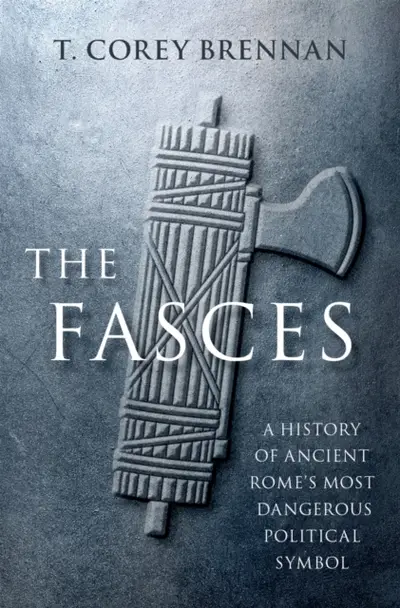
"e;Fascism"e; is a word ubiquitous in our contemporary political discourse, but few know about its roots in the ancient past or its long, strange evolution to the present. In ancient Rome, the fasces were a bundle of wooden rods bound with a leather cord, in which an axe was placed--in essence, a mobile kit for corporal or capital punishment. Attendants typically carried fasces before Rome's higher officials, to induce feelings of respect and fear for the relevant authority. This highly performative Roman institution had a lifespan of almost two millennia, and made a deep impression on subsequent eras, from the Byzantine period to the present. Starting in the Renaissance, we find revivals and reinterpretations of the ancient fasces, accelerating especially after 1789, the first year of the United States' Constitution and the opening volley of the French Revolution. But it was Benito Mussolini, who, beginning in 1919, propagated the fasces on an unprecedented scale. Oddly, today the emblem has grown largely unfamiliar, which in turn has offered an opening to contemporary extremist groups. In The Fasces, T. Corey Brennan offers the first global history of the nature, development, and competing meanings of this stark symbol, from antiquity to the twenty-first century. The word "e;fascism"e; has universal awareness in contemporary political discourse, which thus makes this, the first book to trace the full arc of the fasces' almost 3,000-year history, essential reading for all who wish to understand how the past informs the present.
Bibliographic data © Gardners Books Ltd.