PDF · English
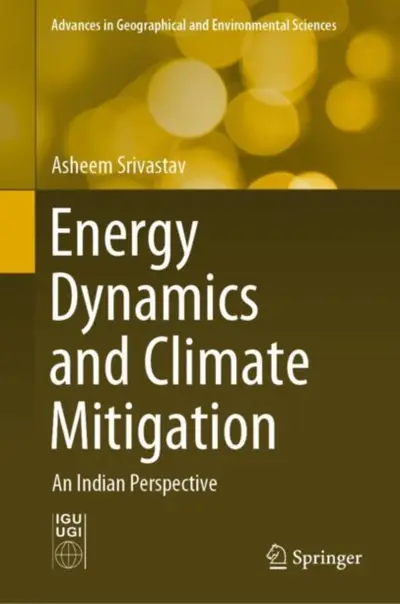
Energy Dynamics and Climate Mitigation
An Indian Perspective
Price and availability
$120.99
Available in: Andorra, Austria, Australia, Belgium, Bulgaria, Canada, Switzerland, Cyprus, Czechia, Germany, Denmark, Estonia, Spain, Finland, France, United Kingdom, Guernsey, Greece, Croatia, Hungary, Ireland, Isle of Man, Iceland, Italy, Jersey, Japan, Liechtenstein, Lithuania, Luxembourg, Latvia, Monaco, Malta, Netherlands, Norway, Poland, Portugal, Romania, Sweden, Slovenia, Slovakia, San Marino, United States, Vatican City, South Africa
Stores: US, UK, Canada, EU, Australia.
Sign in to buyThe price is re-checked by the server before payment.
For personal use under the eBook licence.
- Format
- DRM
- Not stated by the publisher
- Language
- English
- Publisher
- Springer Nature Singapore
- Published
- 19 October 2020
- ISBN
- 9789811589409
- Subjects
- Management & management techniques, Energy industries & utilities, Meteorology & climatology, The environment, Sustainability, Environmental science, engineering & technology, Management and management techniques, Meteorology and climatology, The environment, Sustainability
About this book
This book analyzes the current approaches to energy management in India that is based on a carbon-intensive pathway, which if continued, may have serious implications for climate change mitigation with severe consequences for human health and survival. India, being a signatory to the United Nations Framework Convention on Climate Change (UNFCCC), the Kyoto Protocol, and the Paris Agreement, is committed to reducing greenhouse gas emissions; however, the country's dilemmas are whether to prioritize environment over economy or vice versa and also whether economic growth can be sustained by relying on carbon-intensive development. Those are explored in this book. The Indian economy is poised for a big leap in the near future, and the topmost priority of the government is to ensure energy security, accessibility, and affordability for nearly 1.5 billion people. Currently, 70% of India's electricity generation comes from coal- and oil-based thermalpower plants, and only 12-15% of energy is generated from renewable sources. Experts are of the view that the demand for coal and gas power generation will continue to rise and is expected to reach the equivalent of nearly 2 billion t of oil by 2030. The annual consumption of natural gas is expected to increase fourfold to 200 billion m3 a year in the near future, and its share in the primary energy basket of coal, oil, and gas will rise from 6.5% to 15% by 2030. This will not only cause a significant drain on foreign reserves but will also pose an enormous challenge to policymakers and scientists. This book serves as a useful guide in shaping India's future energy policy.
Bibliographic data © Gardners Books Ltd.