PDF · German
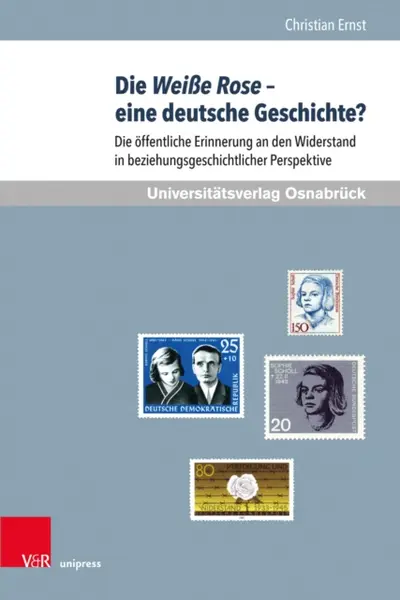
Die Weiße Rose – eine deutsche Geschichte?
Die öffentliche Erinnerung an den Widerstand in beziehungsgeschichtlicher Perspektive
Price and availability
$87.99
Available in: Andorra, Austria, Australia, Belgium, Bulgaria, Canada, Switzerland, Cyprus, Czechia, Germany, Denmark, Estonia, Spain, Finland, France, United Kingdom, Guernsey, Greece, Croatia, Hungary, Ireland, Isle of Man, Iceland, Italy, Jersey, Japan, Liechtenstein, Lithuania, Luxembourg, Latvia, Monaco, Malta, Netherlands, Norway, Poland, Portugal, Romania, Sweden, Slovenia, Slovakia, San Marino, United States, Vatican City, South Africa
Stores: US, UK, Canada, EU, Australia.
Sign in to buyThe price is re-checked by the server before payment.
For personal use under the eBook licence.
- Format
- DRM
- Not stated by the publisher
- Language
- German
- Publisher
- Brill Deutschland GmbH
- Published
- 3 December 2018
- ISBN
- 9783847009092
- Subjects
- 20th century, Literary studies: from c 1900 -, Germany, Literary studies: c 1900 to c 2000
About this book
Erinnerung kann Geschichte schreiben. Christian Ernst unternimmt erstmals eine Zusammenschau der öffentlichen Erinnerung an die Weiße Rose in beiden deutschen Staaten und ihrer Veränderung nach 1990. Die erinnerungskulturelle Stellung der Widerstandsgruppe basiert auf der breiten Rezeption in der Exilliteratur und Nachkriegspublizistik sowie auf vielfältigen Einbettungen in Diskurse der Bundesrepublik und der DDR. Nach 1990 setzen sich unter antitotalitären Prämissen Interpretationen ihrer politischen Bedeutung für eine nationale Erinnerungskultur durch. Dieser Band trägt nicht nur zu einer Beziehungsgeschichte der öffentlichen Erinnerung an den Nationalsozialismus bei, sondern auch zur Historisierung von ›Erinnerungskultur‹ als wissenschaftliches und politisches Konzept.Memory can write History. For the first time, Christian Ernst examines connections between the public remembrance of the Weiße Rose in East and West Germany and how it changes after the unification of the two German states. The prominent role of the resistance group is traced back to its broad reception in exile literature, postwar publications in East and West and its integration into memory discourses in both the Federal German Republic and the GDR. After 1990, interpretations of the political significance of the Weiße Rose for a national memory culture become consensual under antitotalitarian premisses. The study contributes to a history of the memory of national socialism and demonstrates the historicity of German memory culture ('Erinnerungskultur') as both a scientific and a political concept.
Bibliographic data © Gardners Books Ltd.