EPUB · English
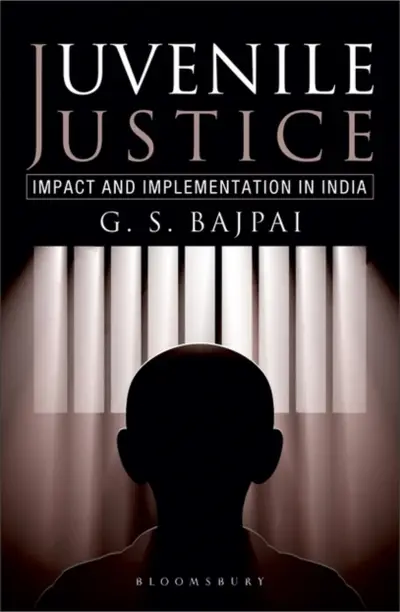
Juvenile Justice
Impact and Implementation in India
Price and availability
$23.99
Available in: Andorra, Austria, Australia, Belgium, Bulgaria, Canada, Switzerland, Cyprus, Czechia, Germany, Denmark, Estonia, Spain, Finland, France, United Kingdom, Guernsey, Greece, Croatia, Hungary, Ireland, Isle of Man, Iceland, Italy, Jersey, Japan, Liechtenstein, Lithuania, Luxembourg, Latvia, Monaco, Malta, Netherlands, Norway, Poland, Portugal, Romania, Sweden, Slovenia, Slovakia, San Marino, United States, Vatican City, South Africa
Stores: US, UK, Canada, EU, Australia.
Sign in to buyThe price is re-checked by the server before payment.
For personal use under the eBook licence.
- Format
- EPUB
- DRM
- Not stated by the publisher
- Language
- English
- Publisher
- Bloomsbury Publishing
- Published
- 18 October 2019
- Pages
- 318
- ISBN
- 9789388414654
- Subjects
- Juvenile criminal law, Law, citizenship & rights for the lay person, Juvenile criminal law, Law, citizenship and rights for the lay person
About this book
There is an existing gap currently in the academic discourse pertaining to the treatment of juveniles before, during and after their conflict with the law. This book attempts to identify this lacuna in the Indian juvenile justice system and study its impact on our children. It remedies this crucial gap by juxtaposing 'what is' with 'what ought to be' by analysing the results of a study conducted in observation homes and special homes in the National Capital Territory of Delhi, Haryana and Punjab. The data was studied on parameters which reflect upon all aspects of the life and experiences of juveniles before their conflict with the law, inside the homes as well as their post-release prospects. This data was then tested vis- -vis the requirements of the standard of living, reformation, rehabilitation and reintegration mandated under the Juvenile Justice Act, 2000, as well as the Juvenile Justice Act, 2015. Presenting a comprehensive account, the book further details the amendments in the juvenile justice laws after the Nirbhaya case and offers a critique to it on the grounds of both descriptive realities as well as the current normative understanding of juvenile justice.
Bibliographic data © Gardners Books Ltd.