PDF · English
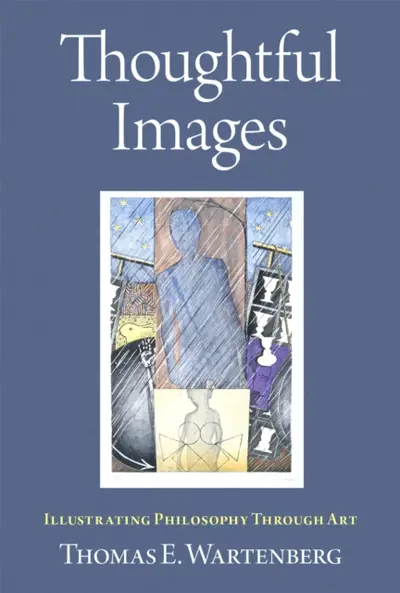
Thoughtful Images
Illustrating Philosophy Through Art
Price and availability
$62.99
Available in: Andorra, Austria, Australia, Belgium, Bulgaria, Canada, Switzerland, Cyprus, Czechia, Germany, Denmark, Estonia, Spain, Finland, France, United Kingdom, Guernsey, Greece, Croatia, Hungary, Ireland, Isle of Man, Iceland, Italy, Jersey, Japan, Liechtenstein, Lithuania, Luxembourg, Latvia, Monaco, Malta, Netherlands, Norway, Poland, Portugal, Romania, Sweden, Slovenia, Slovakia, San Marino, United States, Vatican City, South Africa
Stores: US, UK, Canada, EU, Australia.
Sign in to buyThe price is re-checked by the server before payment.
For personal use under the eBook licence.
- Format
- DRM
- Not stated by the publisher
- Language
- English
- Publisher
- Oxford University Press
- Published
- 17 January 2023
- ISBN
- 9780197650554
- Subjects
- Theory of art, History of art / art & design styles, Philosophy, Philosophy: epistemology & theory of knowledge, History of ideas, Theory of art, AGA, JBCC9, QD, QDTK
About this book
Thoughtful Images demonstrates that there is a rich tradition of illustrations of philosophy that originated in Ancient Greece, spread throughout Europe, thrived in twentieth century America, and continues to this day. It is the first book to isolate this tradition and to explain its relevance for both philosophy and art. It's not surprising that philosophers and others have not acknowledged the existence of this artistic tradition. Illustration is not generally regarded as a genuine art form on a par with painting and sculpture and many believe that the abstract claims made by philosophers are not amenable to being rendered in visual images. Wartenberg shows that the denigration of illustration as an art form is misguided in a number of ways. The book argues that great works of art such as Titian's Rape of Europa are actually illustrations of literary texts--Ovid's Metamorphoses in Titian's case. This undermines the attempt to diminish the artistic achievement of illustrations by seeing them as an inferior art form to painting. That the abstract claims and theories put forward by philosophers are amenable to illustration is supported by the examples discussed in the balance of the book. These examples include illuminated Medieval manuscripts featuring illustrations of Aristotle's ethical theories; the frontispieces of philosophical works in the 17th and 18th century; Friedrich Nietzsche's, Martin Heidegger's, and Michel Foucault's use of paintings to illustrate their theories; the modernist tradition in which art is seen as a form of philosophy; conceptual artists' creation of works that explicitly include ideas taken from Ludwig Wittgenstein's writings; and works of what the author calls graphic philosophy --comic books that include visual representations of philosophical ideas.
Bibliographic data © Gardners Books Ltd.