EPUB · English
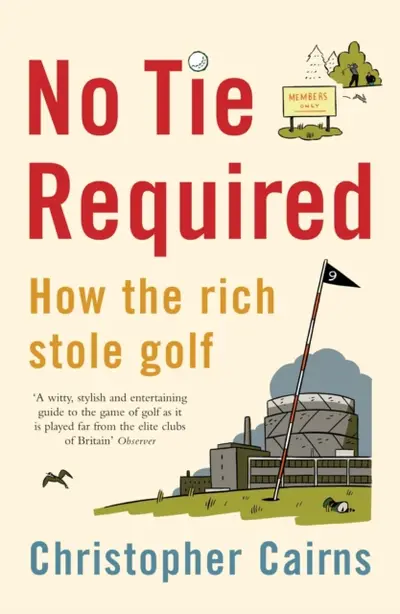
No Tie Required
How the Rich Stole Golf
Price and availability
Not sold in this region
Available in: Andorra, Austria, Australia, Belgium, Bulgaria, Switzerland, Cyprus, Czechia, Germany, Denmark, Estonia, Spain, Finland, France, United Kingdom, Guernsey, Greece, Croatia, Hungary, Ireland, Isle of Man, Iceland, Italy, Jersey, Japan, Liechtenstein, Lithuania, Luxembourg, Latvia, Monaco, Malta, Netherlands, Norway, Poland, Portugal, Romania, Sweden, Slovenia, Slovakia, San Marino, Vatican City, South Africa
Stores: UK, EU, Australia. Not available in the United States store.
This title cannot be bought in this store yet: its supplier terms, territorial rights or price are still being confirmed.
For personal use under the eBook licence.
- Format
- EPUB
- DRM
- Not stated by the publisher
- Language
- English
- Publisher
- Headline
- Published
- 22 May 2014
- ISBN
- 9781472222206
- Subjects
- Biography: sport, Sociology: sport & leisure, Sports teams & clubs, Golf, Biography: sport, Sociology: sport and leisure, Golf
About this book
No Tie Required is an entertaining journey across Britain, celebrating the wonderful, eccentric and historical public courses where no club membership is required. Not for Chris Cairns the member's door and the pink gins of the 19th hole. Instead the author has sought out the country's pay-and-play courses in order to experience how non-members get their golfing fix. Public courses in Britain come in just about every shape and size: from picturesque honesty box courses in the Highlands, to converted potato fields in Essex and over-crowded city parks in London. At all these courses there are regulars who play in all weathers and who are happy to tell their stories. Behind the author's journey - apart from the joy of playing and sharing a pint or two with the locals - is the desire to trace the history of why the game's origins have been so badly relegated in status. Today a handful of highly exclusive private members clubs seem to dominate the image of golf. Is this justified? Or is the 'them and us' approach a fiction in today's Britain?
Bibliographic data © Gardners Books Ltd.