PDF · English
Absent Stone
Mexican Patrimony and the Aftershocks of State Theft
Price and availability
$39.99
Available in: Andorra, Austria, Australia, Belgium, Bulgaria, Canada, Switzerland, Cyprus, Czechia, Germany, Denmark, Estonia, Spain, Finland, France, United Kingdom, Guernsey, Greece, Croatia, Hungary, Ireland, Isle of Man, Iceland, Italy, Jersey, Japan, Liechtenstein, Lithuania, Luxembourg, Latvia, Monaco, Malta, Netherlands, Norway, Poland, Portugal, Romania, Sweden, Slovenia, Slovakia, San Marino, United States, Vatican City, South Africa
Stores: US, UK, Canada, EU, Australia.
Sign in to buyThe price is re-checked by the server before payment.
For personal use under the eBook licence.
- Format
- DRM
- Not stated by the publisher
- Language
- English
- Publisher
- Duke University Press
- Published
- 23 January 2026
- ISBN
- 9781478061878
- Subjects
- Mexico, Museology & heritage studies, Ethnic studies, Indigenous peoples, Mexico, Orality / Oral transmission, JBSL, JBSL11
About this book
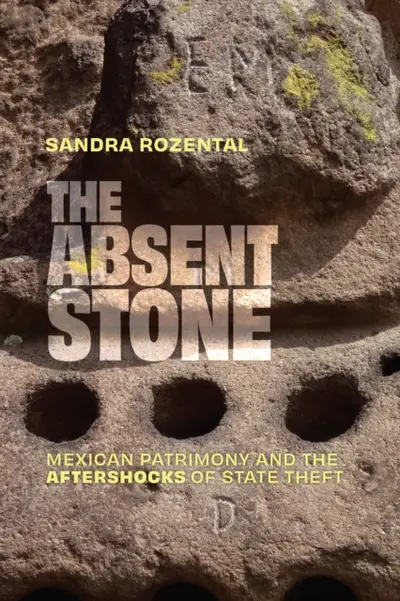
Where and to whom do ancient things belong? What happens when they are stolen-not by a colonial power, but by a national museum claiming them as state patrimony? What kinds of healing and restitution can follow? In The Absent Stone, Sandra Rozental tells the story of the Piedra de los Tecomates, the largest stone monument in the Americas, popularly identified as the pre-Hispanic rain deity Tlaloc. In 1964, the Mexican state called in the military to forcefully relocate this 167-ton carving from the town of Coatlinchan to Mexico City's National Anthropology Museum. Using in-depth historical and ethnographic research, Rozental traces how the stone's absence continues to affect and unsettle Coatlinchan and its residents decades later, revealing the tensions between patrimony, nationalism, territory, memory, and materiality in Mexico. Questioning the premise that historical artifacts belong in museums under state-sanctioned care, The Absent Stone pushes contemporary critical scholarship on monuments and museum collections beyond the language of law, heritage, and cultural property, demonstrating how ancient things remain bound to the people and places they come from even after they are removed and displayed elsewhere.
Bibliographic data © Gardners Books Ltd.