EPUB · English
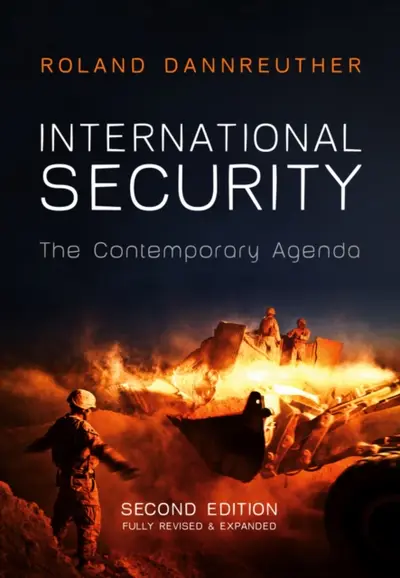
International Security
The Contemporary Agenda
Price and availability
$25.99
Available in: Andorra, Austria, Australia, Belgium, Bulgaria, Canada, Switzerland, Cyprus, Czechia, Germany, Denmark, Estonia, Spain, Finland, France, United Kingdom, Guernsey, Greece, Croatia, Hungary, Ireland, Isle of Man, Iceland, Italy, Jersey, Japan, Liechtenstein, Lithuania, Luxembourg, Latvia, Monaco, Malta, Netherlands, Norway, Poland, Portugal, Romania, Sweden, Slovenia, Slovakia, San Marino, United States, Vatican City, South Africa
Stores: US, UK, Canada, EU, Australia.
Sign in to buyThe price is re-checked by the server before payment.
For personal use under the eBook licence.
- Format
- EPUB
- DRM
- Not stated by the publisher
- Language
- English
- Publisher
- Polity Press
- Published
- 28 January 2014
- ISBN
- 9780745656885
- Subjects
- Politics & government, International relations, Defence strategy, planning & research, Politics and government, International relations, Military and defence strategy
About this book
International Security is a cutting-edge analysis of the key security challenges and developments in the post-Cold War world. Drawing on a wide range of contemporary examples, from the Iraq war to the rise of China, it is an essential guide for students and policy makers seeking to understand the theoretical and empirical debates over the fast-changing nature of international security today.The book is organized into four main parts. Part 1 provides an analytical framework for the book, identifying the most significant post-Cold War shifts in international security and recent theoretical developments in security studies. Part 2 analyses the root causes for contemporary warfare, the dilemmas and debates over military intervention, and the role played by the UN, NATO and other organizations in maintaining international peace and security. Part 3 assesses the challenges of environmental security, including the threat of resource-based conflict, most notably over oil and water, and the perceived security challenges of international migration. Part 4 discusses the new security challenges posed by international terrorism, the proliferation of weapons of mass destruction, and cyber warfare. It explores the strategies and policies adopted by the United States, particularly in the aftermath of 9/11 and assesses the implications of the rise of China and other emerging powers.This book will be essential reading for students and analysts of international relations, international security and strategic studies.
Bibliographic data © Gardners Books Ltd.