PDF · English
New Nuclear Disorder
Challenges to Deterrence and Strategy
Price and availability
$56.99
Available in: Andorra, Austria, Australia, Belgium, Bulgaria, Canada, Switzerland, Cyprus, Czechia, Germany, Denmark, Estonia, Spain, Finland, France, United Kingdom, Guernsey, Greece, Croatia, Hungary, Ireland, Isle of Man, Iceland, Italy, Jersey, Japan, Liechtenstein, Lithuania, Luxembourg, Latvia, Monaco, Malta, Netherlands, Norway, Poland, Portugal, Romania, Sweden, Slovenia, Slovakia, San Marino, United States, Vatican City, South Africa
Stores: US, UK, Canada, EU, Australia.
Sign in to buyThe price is re-checked by the server before payment.
For personal use under the eBook licence.
- Format
- DRM
- Not stated by the publisher
- Language
- English
- Publisher
- Taylor & Francis
- Published
- 17 February 2016
- ISBN
- 9781317022725
- Subjects
- Peace studies & conflict resolution, Politics & government, Arms negotiation & control, Military engineering, World
About this book
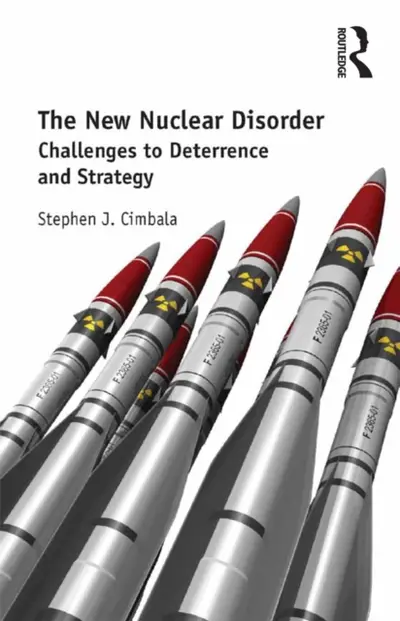
In the twenty-first century, the United States confronts an international system of great complexity and shifting security challenges. Among these challenges are those posed by nuclear weapons. Instead of becoming obsolete or being marginalized by the end of the Cold War and the demise of the Soviet Union, nuclear weapons have become more important to present and future international stability and peace but the relationship is paradoxical. On one hand, the spread of nuclear weapons to additional states with unsettled grievances or hegemonic ambitions threatens to destabilize local balances of power and set off regional arms races. In addition, the possible acquisition by terrorists of nuclear weapons or fissile materials creates a threat that may be 'beyond deterrence' according to hitherto accepted concepts. On the other hand, nuclear weapons in the hands of other states can contribute to stable deterrence and help to prevent nuclear proliferation to international miscreants. Certain cases loom large in the short run that highlight this book's relevance, including the possible acquisition and deployment of nuclear weapons by Iran and the continuing tensions created by North Korea's nuclear arsenal. The Obama 'pivot' of national security and defense emphasis to Asia reflects not only the growing economic importance of that region, but also the growing number of security dilemmas in a region that is already awash in nuclear forces. The management of nuclear crises and even the possible need to terminate nuclear wars before they expand beyond a single region are among the possible challenges facing future U.S. and allied policy makers and military leaders.
Bibliographic data © Gardners Books Ltd.