PDF · English
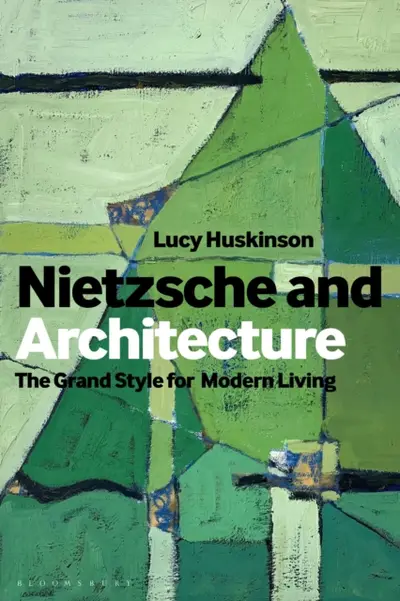
Nietzsche and Architecture
The Grand Style for Modern Living
Price and availability
$31.99
Available in: Andorra, Austria, Australia, Belgium, Bulgaria, Canada, Switzerland, Cyprus, Czechia, Germany, Denmark, Estonia, Spain, Finland, France, United Kingdom, Guernsey, Greece, Croatia, Hungary, Ireland, Isle of Man, Iceland, Italy, Jersey, Japan, Liechtenstein, Lithuania, Luxembourg, Latvia, Monaco, Malta, Netherlands, Norway, Poland, Portugal, Romania, Sweden, Slovenia, Slovakia, San Marino, United States, Vatican City, South Africa
Stores: US, UK, Canada, EU, Australia.
Sign in to buyThe price is re-checked by the server before payment.
For personal use under the eBook licence.
- Format
- DRM
- Not stated by the publisher
- Language
- English
- Publisher
- Bloomsbury Publishing
- Published
- 25 July 2024
- Pages
- 280
- ISBN
- 9781350412934
- Subjects
- Theory of architecture, History of Western philosophy, Theory of architecture, QDH
About this book
Nietzsche and Architecture explores Nietzsche's relationship to the architects, buildings, and modern architectural movements he went on to inspire, and situates his philosophy more appropriately and comprehensively within the field of architectural studies, architectural history, and theory. Divided into two parts, the book first examines Nietzsche's philosophy of architecture, exploring his notions of rhythm, ornament, style, and power. It then goes on to examine Nietzsche's ambiguous architectural legacy, scrutinising iconic architects, thinkers, designs, and cultural movements to ascertain their relationship with Nietzschean ideas, from the crystal architecture of Bruno Taut and Peter Behrens, to the 'new styles' of the Bauhaus and Le Corbusier, Louis H. Sullivan's desire for the heights, and the cultural propaganda of 'Nazi architecture'. Clearly explaining the subtleties and complexities of Nietzsche's architectural thought, Nietzsche and Architecture provides an accessible insight into Nietzsche's philosophy and its significance to the development of modern architecture in the 19th and early 20th centuries, shedding vital light on the continued relevance of Nietzsche to architecture today.
Bibliographic data © Gardners Books Ltd.