PDF · English
Only Constant Is Change
Technology, Political Communication, and Innovation Over Time
Price and availability
$36.99
Available in: Andorra, Austria, Australia, Belgium, Bulgaria, Canada, Switzerland, Cyprus, Czechia, Germany, Denmark, Estonia, Spain, Finland, France, United Kingdom, Guernsey, Greece, Croatia, Hungary, Ireland, Isle of Man, Iceland, Italy, Jersey, Japan, Liechtenstein, Lithuania, Luxembourg, Latvia, Monaco, Malta, Netherlands, Norway, Poland, Portugal, Romania, Sweden, Slovenia, Slovakia, San Marino, United States, Vatican City, South Africa
Stores: US, UK, Canada, EU, Australia.
Sign in to buyThe price is re-checked by the server before payment.
For personal use under the eBook licence.
- Format
- DRM
- Not stated by the publisher
- Language
- English
- Publisher
- Oxford University Press
- Published
- 2 April 2018
- ISBN
- 9780190698997
- Subjects
- Communication studies, Political science & theory, Political campaigning & advertising, Communication studies, Political science and theory, JPWC
About this book
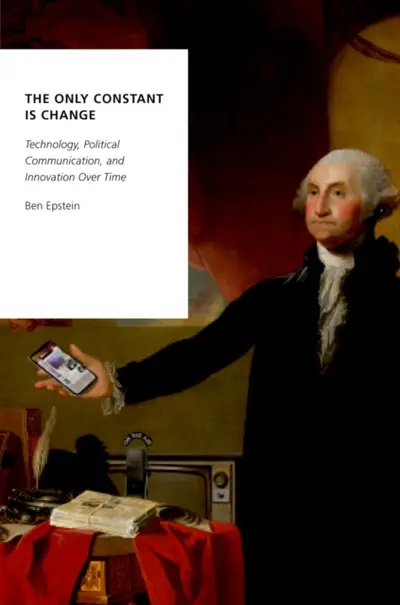
Over the course of American political history, political elites and organizations have often updated their political communications strategies in order to achieve longstanding political communication goals in more efficient or effective ways. But why do successful innovations occur when they do, and what motivates political actors to make choices about how to innovate their communication tactics? Covering over 300 years of political communication innovations, Ben Epstein shows how this process of change happens and why. To do this, Epstein, following an interdisciplinary approach, proposes a new model called "e;the political communication cycle"e; that accounts for the technological, behavioral, and political factors that lead to revolutionary political communication changes over time. These changes (at least the successful ones) have been far from gradual, as long periods of relatively stable political communication activities have been disrupted by brief periods of dramatic and permanent transformation. These transformations are driven by political actors and organizations, and tend to follow predictable patterns. Epstein moves beyond the technological determinism that characterizes communication history scholarship and the medium-specific focus of much political communication work. The book identifies the political communication revolutions that have, in the United States, led to four, relatively stable political communication orders over history: the elite, mass, broadcast, and (the current) information orders. It identifies and tests three phases of each revolutionary cycle, ultimately sketching possible paths for the future. The Only Constant is Change offers readers and scholars a model and vocabulary to compare political communication changes across time and between different types of political organizations. This provides greater understanding of where we are currently in the recurring political communication cycle, and where we might be headed.
Bibliographic data © Gardners Books Ltd.