EPUB · English
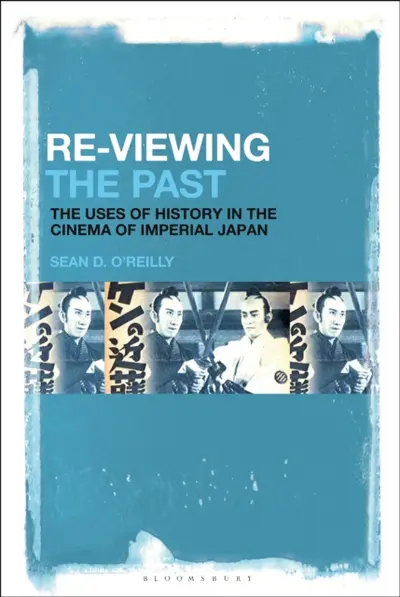
Re-Viewing the Past
The Uses of History in the Cinema of Imperial Japan
Price and availability
$41.99
Available in: Andorra, Austria, Australia, Belgium, Bulgaria, Canada, Switzerland, Cyprus, Czechia, Germany, Denmark, Estonia, Spain, Finland, France, United Kingdom, Guernsey, Greece, Croatia, Hungary, Ireland, Isle of Man, Iceland, Italy, Jersey, Japan, Liechtenstein, Lithuania, Luxembourg, Latvia, Monaco, Malta, Netherlands, Norway, Poland, Portugal, Romania, Sweden, Slovenia, Slovakia, San Marino, United States, Vatican City, South Africa
Stores: US, UK, Canada, EU, Australia.
Sign in to buyThe price is re-checked by the server before payment.
For personal use under the eBook licence.
- Format
- EPUB
- DRM
- Not stated by the publisher
- Language
- English
- Publisher
- Bloomsbury Publishing (USA)
- Published
- 23 August 2018
- Pages
- 320
- ISBN
- 9781501336034
- Subjects
- Japan, Film theory & criticism, Asian history, ATFA, NHF
About this book
Re-Viewing the Past: The Uses of History in the Cinema of Imperial Japan analyzes the complicated relationship between history films, audiences, reviewers and censors in Japan for the critically important years from 1925-1945. First contextualizing the history of the popular "e;Bakumatsu"e; period (1853-1868), the moment of Japan's emergence as a modern nation, Sean O'Reilly paves the way for a reinterpretation of Japanese pre and postwar cinema. Setting a film in the Bakumatsu period offered 'cultural breathing room' to both filmmakers and viewers, offering a cinematic space where apolitical entertainment and now-forbidden themes like romance still reigned. Some filmmakers-and viewers-even conceived of these films as being a form of resistance against Japan's growing militarism. As comparisons between the popularity of such films versus that of state-sponsored propaganda films show, audiences responded enthusiastically to these glimmers of resistance. O'Reilly argues that we should turn our attention to the much more popular films of the time that were major hits with audiences in order to understand what resonated with wartime spectators, and to speculate about why this might have been the case. Including clips of these rare films, a so-far neglected area of Japanese film history is now firmly situated in context to offer a thought-provoking, multidisciplinary approach.
Bibliographic data © Gardners Books Ltd.