PDF · English
Femininity in the Frame
Women and 1950s British Popular Cinema
Price and availability
$24.99
Available in: Andorra, Austria, Australia, Belgium, Bulgaria, Canada, Switzerland, Cyprus, Czechia, Germany, Denmark, Estonia, Spain, Finland, France, United Kingdom, Guernsey, Greece, Croatia, Hungary, Ireland, Isle of Man, Iceland, Italy, Jersey, Japan, Liechtenstein, Lithuania, Luxembourg, Latvia, Monaco, Malta, Netherlands, Norway, Poland, Portugal, Romania, Sweden, Slovenia, Slovakia, San Marino, United States, Vatican City, South Africa
Stores: US, UK, Canada, EU, Australia.
Sign in to buyThe price is re-checked by the server before payment.
For personal use under the eBook licence.
- Format
- DRM
- Not stated by the publisher
- Language
- English
- Publisher
- Bloomsbury Publishing
- Published
- 30 November 2009
- Pages
- 240
- ISBN
- 9780857712639
- Subjects
- United Kingdom, Great Britain, Films, cinema, Film: styles & genres, ATF, ATFN
About this book
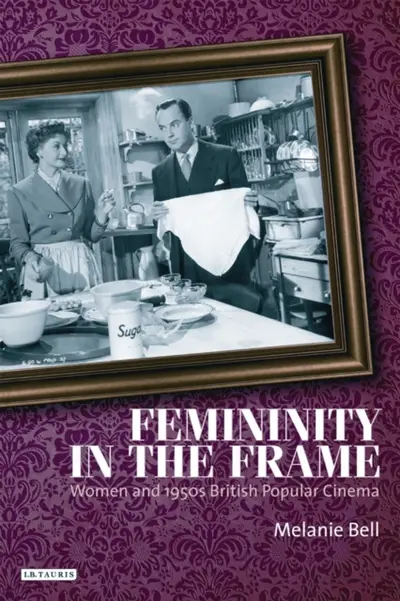
It's widely assumed that Britain in the 1950s experienced a return to traditional gender roles. Popular cinema has typically been seen to represent this era through the dominant image of the 'happy housewife'. "e;Femininity in the Frame"e; is a sharply observant account of how British cinema engaged with femininity and women's roles during this important period. Written in a lively and accessible manner, it challenges received understandings, arguing that the period was marked by social unease and anxiety about gender roles and femininity, with much British cinema producing ambiguous messages about feminine identities and the role of women. Through analysing marginalized figures, such as prostitutes, criminals and femmes fatales, and addressing central themes, notably sexuality, marriage and female friendship, Melanie Bell examines how British popular cinema imagined and constructed femininity in this era of rapid social and cultural change.She draws together sources ranging from official reports to film reviews, with case studies of films across genres, including "e;The Perfect Woman"e;, "e;Young Wives' Tale"e;, "e;The Weak and the Wicked"e; and "e;A Town Like Alice"e;, to show how new ideas and understandings of femininity were seeping into the cultural imagery at this time. She demonstrates how such films expressed proto-feminist ideas and how they ultimately explored new forms of femininity in a manner that has not until now been recognised.
Bibliographic data © Gardners Books Ltd.