EPUB · English
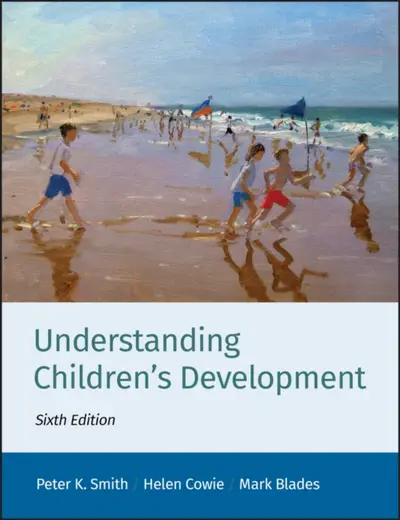
Understanding Children's Development
Price and availability
$59.99
Available in: Andorra, Austria, Australia, Belgium, Bulgaria, Canada, Switzerland, Cyprus, Czechia, Germany, Denmark, Estonia, Spain, Finland, France, United Kingdom, Guernsey, Greece, Croatia, Hungary, Ireland, Isle of Man, Iceland, Italy, Jersey, Japan, Liechtenstein, Lithuania, Luxembourg, Latvia, Monaco, Malta, Netherlands, Norway, Poland, Portugal, Romania, Sweden, Slovenia, Slovakia, San Marino, United States, Vatican City, South Africa
Stores: US, UK, Canada, EU, Australia.
Sign in to buyThe price is re-checked by the server before payment.
For personal use under the eBook licence.
- Format
- EPUB
- DRM
- Not stated by the publisher
- Language
- English
- Publisher
- Wiley
- Published
- 14 August 2015
- ISBN
- 9781119025030
- Subjects
- Social & cultural anthropology, ethnography, Psychology, Child & developmental psychology, Social and cultural anthropology, Psychology, Child, developmental and lifespan psychology
About this book
Understanding Children's Development is the UK's best-selling developmental psychology textbook and has been widely acclaimed for its international coverage and rigorous research-based approach. This dynamic text emphasizes the practical and applied implications of developmental research. It begins by introducing the ways in which psychologists study developmental processes before going on to consider all major aspects of development from conception through to adolescence. New to the 6th Edition: Increased coverage in many areas, including ethics; children's rights; participatory research methods; three models of human plasticity; breastfeeding and cognitive development; fostering; non-resident or absent fathers; parenting styles in China; effects of domestic violence on children; physical punishment, and child maltreatment; the development and fostering of emotional intelligence; homophobic bullying and cyberbullying; and developing intercultural competence through education. There are entirely new sections on immigration, acculturation, and friendships in multicultural settings; disruptive behaviour and oppositional defiant disorder; sexting; and adolescent bedtimes. The Adolescence chapter has been extensively revised, covering work on the social brain, insights from neuroscience, evolutionary perspectives on risk-taking and peer relationships, romantic development, and use of mobile phones and the internet.
Bibliographic data © Gardners Books Ltd.