PDF · English
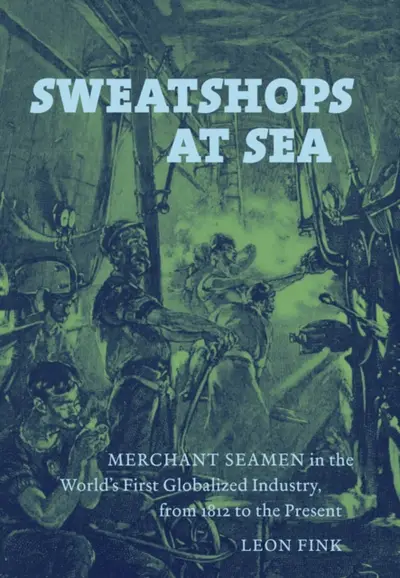
Sweatshops at Sea
Merchant Seamen in the World''s First Globalized Industry, from 1812 to the Present
Price and availability
$70.99
Available in: Andorra, Austria, Australia, Belgium, Bulgaria, Canada, Switzerland, Cyprus, Czechia, Germany, Denmark, Estonia, Spain, Finland, France, United Kingdom, Guernsey, Greece, Croatia, Hungary, Ireland, Isle of Man, Iceland, Italy, Jersey, Japan, Liechtenstein, Lithuania, Luxembourg, Latvia, Monaco, Malta, Netherlands, Norway, Poland, Portugal, Romania, Sweden, Slovenia, Slovakia, San Marino, United States, Vatican City, South Africa
Stores: US, UK, Canada, EU, Australia.
Sign in to buyThe price is re-checked by the server before payment.
For personal use under the eBook licence.
- Format
- DRM
- Not stated by the publisher
- Language
- English
- Publisher
- The University of North Carolina Press
- Published
- 14 March 2011
- ISBN
- 9781469603322
- Subjects
- USA, History of the Americas, Maritime history, Central government policies, Industrial relations, health & safety, Industrial relations, Legal history, Ships & boats: general interest, United States of America, USA, Industrial arbitration and negotiation, Trade unions, Legal history, History of the Americas
About this book
As the main artery of international commerce, merchant shipping was the world's first globalized industry, often serving as a vanguard for issues touching on labor recruiting, the employment relationship, and regulatory enforcement that crossed national borders. In Sweatshops at Sea, historian Leon Fink examines the evolution of laws and labor relations governing ordinary seamen over the past two centuries. The merchant marine offers an ideal setting for examining the changing regulatory regimes applied to workers by the United States, Great Britain, and, ultimately, an organized world community. Fink explores both how political and economic ends are reflected in maritime labor regulations and how agents of reform--including governments, trade unions, and global standard-setting authorities--grappled with the problems of applying land-based, national principles and regulations of labor discipline and management to the sea-going labor force. With the rise of powerful nation-states in a global marketplace in the nineteenth century, recruitment and regulation of a mercantile labor force emerged as a high priority and as a vexing problem for Western powers. The history of exploitation, reform, and the evolving international governance of sea labor offers a compelling precedent in an age of more universal globalization of production and services.
Bibliographic data © Gardners Books Ltd.