PDF · English
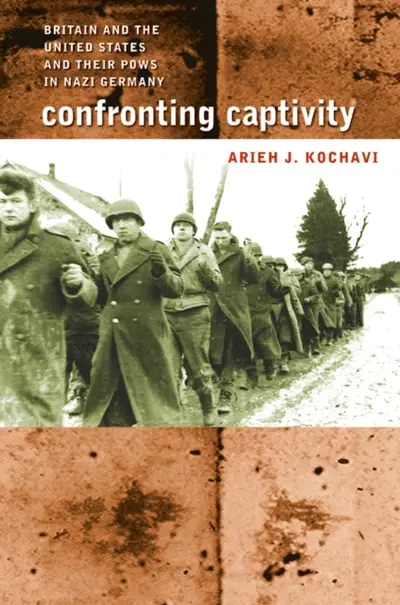
Confronting Captivity
Britain and the United States and Their POWs in Nazi Germany
Price and availability
$40.99
Available in: Andorra, Austria, Australia, Belgium, Bulgaria, Canada, Switzerland, Cyprus, Czechia, Germany, Denmark, Estonia, Spain, Finland, France, United Kingdom, Guernsey, Greece, Croatia, Hungary, Ireland, Isle of Man, Iceland, Italy, Jersey, Japan, Liechtenstein, Lithuania, Luxembourg, Latvia, Monaco, Malta, Netherlands, Norway, Poland, Portugal, Romania, Sweden, Slovenia, Slovakia, San Marino, United States, Vatican City, South Africa
Stores: US, UK, Canada, EU, Australia.
Sign in to buyThe price is re-checked by the server before payment.
For personal use under the eBook licence.
- Format
- DRM
- Not stated by the publisher
- Language
- English
- Publisher
- The University of North Carolina Press
- Published
- 20 January 2011
- ISBN
- 9798890878151
- Subjects
- United Kingdom, Great Britain, Germany, c 1939 to c 1945 (including WW2), European history, British & Irish history, 20th century history: c 1900 to c 2000, Second World War, Diplomacy, Prisoners of war, United Kingdom, Great Britain, Diplomacy, European history, Second World War
About this book
How was it possible that almost all of the nearly 300,000 British and American troops who fell into German hands during World War II survived captivity in German POW camps and returned home almost as soon as the war ended? In Confronting Captivity, Arieh J. Kochavi offers a behind-the-scenes look at the living conditions in Nazi camps and traces the actions the British and American governments took and didnt take to ensure the safety of their captured soldiers.Concern in London and Washington about the safety of these POWs was mitigated by the recognition that the Nazi leadership tended to adhere to the Geneva Convention when it came to British and U.S. prisoners. Following the invasion of Normandy, however, Allied apprehension over the safety of POWs turned into anxiety for their very lives. Yet Britain and the United States took the calculated risk of counting on a swift conclusion to the war as the Soviets approached Germany from the east. Ultimately, Kochavi argues, it was more likely that the lives of British and American POWs were spared because of their race rather than any actions their governments took on their behalf.
Bibliographic data © Gardners Books Ltd.