PDF · English
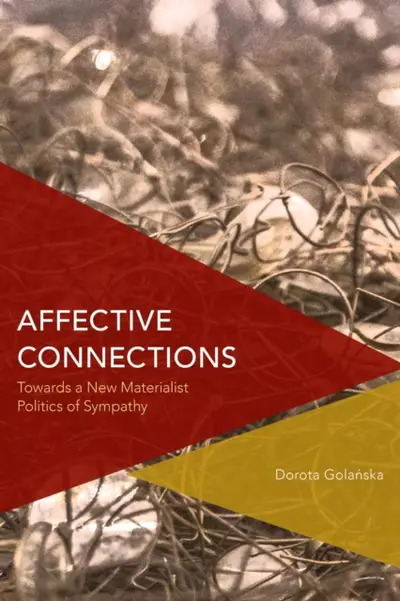
Affective Connections
Towards a New Materialist Politics of Sympathy
Price and availability
$53.99
Available in: Andorra, Austria, Australia, Belgium, Bulgaria, Canada, Switzerland, Cyprus, Czechia, Germany, Denmark, Estonia, Spain, Finland, France, United Kingdom, Guernsey, Greece, Croatia, Hungary, Ireland, Isle of Man, Iceland, Italy, Jersey, Japan, Liechtenstein, Lithuania, Luxembourg, Latvia, Monaco, Malta, Netherlands, Norway, Poland, Portugal, Romania, Sweden, Slovenia, Slovakia, San Marino, United States, Vatican City, South Africa
Stores: US, UK, Canada, EU, Australia.
Sign in to buyThe price is re-checked by the server before payment.
For personal use under the eBook licence.
- Format
- DRM
- Not stated by the publisher
- Language
- English
- Publisher
- Bloomsbury Publishing (USA)
- Published
- 20 December 2017
- Pages
- 268
- ISBN
- 9781783489718
- Subjects
- Western philosophy, from c 1900 -, Social & political philosophy, QDHR, QDTS
About this book
Inspired by the philosophical framework of Deleuze and Guattari in relation to affect, Affective Connections disavows the dominant oppositional discourse around representation to offer an affirmative approach to perception, cognition and experience. It advances a new materialist concept of synaesthetic perception, where synaesthesia is understood as a union of senses. This idea offers a new figuration for thinking about our cognition, exploring the role of embodied experience and the agency of matter in the production of knowledge. Looking at a number of memorials, memory sites and artworks relating to the Holocaust the book uses this idea of synaesthetic perception to explore trauma, memory and the production of art in relation to painful memories. In doing so, it demonstrates that modes of interacting with the past and encountering the lived experience of trauma can trigger a deeper understanding of these events and produce more complex forms of affective connections. It proposes a shift away from empathy towards sympathy (understood in new materialist terms), not just as a sentimental response to trauma but as an affective notion that allows for a more comprehensive grasp of experiences of discrimination, exclusion, suffering, or pain.
Bibliographic data © Gardners Books Ltd.