PDF · English
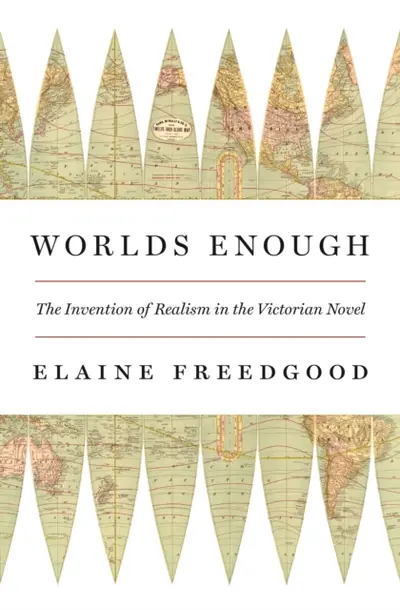
Worlds Enough
The Invention of Realism in the Victorian Novel
Price and availability
$37.99
Available in: Andorra, Austria, Australia, Belgium, Bulgaria, Canada, Switzerland, Cyprus, Czechia, Germany, Denmark, Estonia, Spain, Finland, France, United Kingdom, Guernsey, Greece, Croatia, Hungary, Ireland, Isle of Man, Iceland, Italy, Jersey, Japan, Liechtenstein, Lithuania, Luxembourg, Latvia, Monaco, Malta, Netherlands, Norway, Poland, Portugal, Romania, Sweden, Slovenia, Slovakia, San Marino, United States, Vatican City, South Africa
Stores: US, UK, Canada, EU, Australia.
Sign in to buyThe price is re-checked by the server before payment.
For personal use under the eBook licence.
- Format
- DRM
- Not stated by the publisher
- Language
- English
- Publisher
- Princeton University Press
- Published
- 15 October 2019
- ISBN
- 9780691194301
- Subjects
- United Kingdom, Great Britain, Ireland, English, Literary theory, Literary studies: general, Literary studies: c 1800 to c 1900, Literary studies: fiction, novelists & prose writers, Ireland, United Kingdom, Great Britain, Literature: history and criticism, Literary theory
About this book
A short, provocative book that challenges basic assumptions about Victorian fictionNow praised for its realism and formal coherence, the Victorian novel was not always great, or even good, in the eyes of its critics. As Elaine Freedgood reveals in Worlds Enough, it was only in the late 1970s that literary critics constructed a prestigious version of British realism, erasing more than a century of controversy about the value of Victorian fiction.Examining criticism of Victorian novels since the 1850s, Freedgood demonstrates that while they were praised for their ability to bring certain social truths to fictional life, these novels were also criticized for their formal failures and compared unfavorably to their French and German counterparts. She analyzes the characteristics of realism-denotation, omniscience, paratext, reference, and ontology-and the politics inherent in them, arguing that if critics displaced the nineteenth-century realist novel as the standard by which others are judged, literary history might be richer. It would allow peripheral literatures and the neglected wisdom of their critics to come fully into view. She concludes by questioning the aesthetic racism built into prevailing ideas about the centrality of realism in the novel, and how those ideas have affected debates about world literature.By re-examining the critical reception of the Victorian novel, Worlds Enough suggests how we can rethink our practices and perceptions about books we think we know.
Bibliographic data © Gardners Books Ltd.