EPUB · English
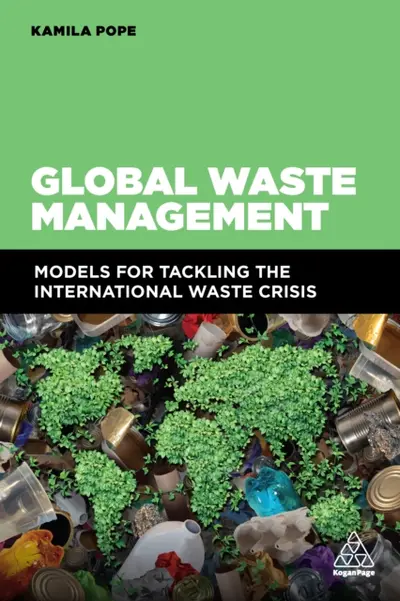
Global Waste Management
Models for Tackling the International Waste Crisis
Price and availability
$81.99
Available in: Andorra, Austria, Australia, Belgium, Bulgaria, Canada, Switzerland, Cyprus, Czechia, Germany, Denmark, Estonia, Spain, Finland, France, United Kingdom, Guernsey, Greece, Croatia, Hungary, Ireland, Isle of Man, Iceland, Italy, Jersey, Japan, Liechtenstein, Lithuania, Luxembourg, Latvia, Monaco, Malta, Netherlands, Norway, Poland, Portugal, Romania, Sweden, Slovenia, Slovakia, San Marino, United States, Vatican City, South Africa
Stores: US, UK, Canada, EU, Australia.
Sign in to buyThe price is re-checked by the server before payment.
For personal use under the eBook licence.
- Format
- EPUB
- DRM
- Not stated by the publisher
- Language
- English
- Publisher
- Kogan Page
- Published
- 3 April 2020
- ISBN
- 9781789660784
- Subjects
- Waste management, Sustainability, Waste treatment & disposal, Waste management, Sustainability, Waste treatment and disposal
About this book
WINNER: 2020 International Solid Waste Association Publication Award Among other factors, rapid global population growth, our development model and patterns of production and consumption have increased waste generation worldwide to unsustainable rates. This rise has led to crises in many countries where waste management practices are no longer sound. Global Waste Management outlines the emerging global waste crisis considering the perspectives of developed and developing countries around the world and the international relationships between them. This book provides an ecological viewpoint as well as studying these problems from a legal and justice standpoint. Global Waste Management contextualises the problems faced when dealing with waste including the causes and origins. Focus is given to cross border waste transfer, as an ongoing and controversial practice, making waste management a global matter. This book scrutinizes existing international, European and Brazilian regulation on waste to highlight the complexity of the subject and the weaknesses of the law. Using a critical and socio-ecological approach, the book proposes an original model of governance to support a new system of global waste management that takes into account ecological sustainability and social justice to overcome the waste crisis. To create these models, a theoretical framework on socio-ecological justice is developed and combined with different discourses and theories described throughout the book. This is the essential guide to understanding the global waste crisis and the future of waste management.
Bibliographic data © Gardners Books Ltd.