PDF · English
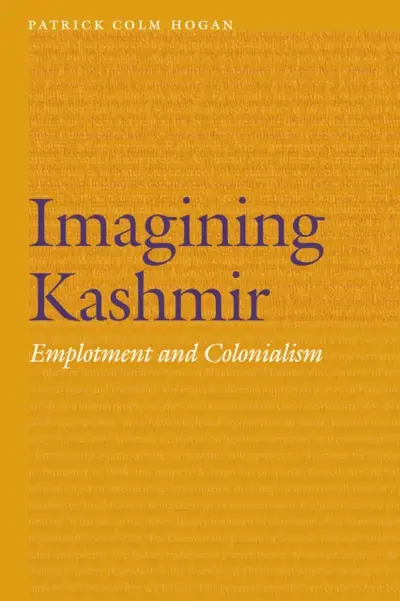
Imagining Kashmir
Emplotment and Colonialism
Price and availability
$51.99
Available in: Andorra, Austria, Australia, Belgium, Bulgaria, Canada, Switzerland, Cyprus, Czechia, Germany, Denmark, Estonia, Spain, Finland, France, United Kingdom, Guernsey, Greece, Croatia, Hungary, Ireland, Isle of Man, Iceland, Italy, Jersey, Japan, Liechtenstein, Lithuania, Luxembourg, Latvia, Monaco, Malta, Netherlands, Norway, Poland, Portugal, Romania, Sweden, Slovenia, Slovakia, San Marino, United States, Vatican City, South Africa
Stores: US, UK, Canada, EU, Australia.
Sign in to buyThe price is re-checked by the server before payment.
For personal use under the eBook licence.
- Format
- DRM
- Not stated by the publisher
- Language
- English
- Publisher
- University of Nebraska Press
- Published
- 1 October 2016
- ISBN
- 9780803294899
- Subjects
- Indian sub-continent, India, Modern Indic languages, Literature: history & criticism, Literary studies: general, Asian history, South Asia (Indian sub-continent), India, Literature: history and criticism, Asian history
About this book
During the 1947 partition of the Indian subcontinent, Kashmir-a Muslim-majority area ruled by a Hindu maharaja-became a hotly disputed territory. Divided between India and Pakistan, the region has been the focus of international wars and the theater of political and military struggles for self-determination. The result has been great human suffering within the state, with political implications extending globally.Imagining Kashmir examines cinematic and literary imaginings of the Kashmir regions conflicts and diverse citizenship, analyzing a wide range of narratives from writers and directors such as Salman Rushdie, Bharat Wakhlu, Mani Ratnam, and Mirza Waheed in conjunction with research in psychology, cognitive science, and social neuroscience. In this innovative study, Patrick Colm Hogans historical and cultural analysis of Kashmir advances theories of narrative, colonialism, and their corresponding ideologies in relation to the cognitive and affective operations of identity. Hogan considers how narrative organizes peoples understanding of, and emotions about, real political situations and the ways in which such situations in turn influence cultural narratives, not only in Kashmir but around the world.
Bibliographic data © Gardners Books Ltd.