PDF · German
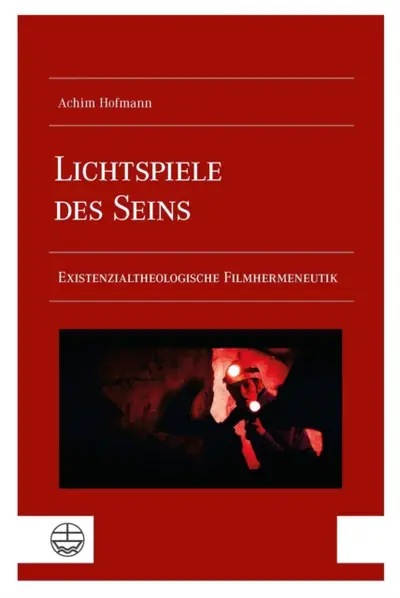
Lichtspiele des Seins
Existenzialtheologische Filmhermeneutik
Price and availability
$76.99
Available in: Andorra, Austria, Australia, Belgium, Bulgaria, Canada, Switzerland, Cyprus, Czechia, Germany, Denmark, Estonia, Spain, Finland, France, United Kingdom, Guernsey, Greece, Croatia, Hungary, Ireland, Isle of Man, Iceland, Italy, Jersey, Japan, Liechtenstein, Lithuania, Luxembourg, Latvia, Monaco, Malta, Netherlands, Norway, Poland, Portugal, Romania, Sweden, Slovenia, Slovakia, San Marino, United States, Vatican City, South Africa
Stores: US, UK, Canada, EU, Australia.
Sign in to buyThe price is re-checked by the server before payment.
For personal use under the eBook licence.
- Format
- DRM
- Not stated by the publisher
- Language
- German
- Publisher
- Evangelische Verlagsanstalt GmbH
- Published
- 18 October 2024
- ISBN
- 9783374077441
- Subjects
- Theology, Theology
About this book
Das Kino hat die Macht, Menschen tiefgreifend zu verändern. Es formt die Möglichkeiten, wie sie sich selbst verstehen und wie sie auf andere – auch auf Gott – bezogen sind. Diese vielfältigen Verflechtungen werden vom Kino als Ort der Kunstdarbietung und der Filmästhetik fundamental beeinflusst.Die vorliegende Untersuchung legt einen neuen Zugang zum Forschungsbereich »Religion und Film« vor und benennt als dafür grundlegenden Begriff die menschliche Existenz. Wie von der Existenz des Menschen in ihrem Verhältnis zu Gott gesprochen werden kann, durchzieht die Theologie Rudolf Bultmanns und verweist auf deren Verschränkung mit der Philosophie Martin Heideggers. Mit Bezug auf Werke beider Denker rückt der Mensch als Geschöpf Gottes in den Mittelpunkt einer in dieser Untersuchung entwickelten existenzialtheologischen Kino- und Filmtheorie, die anhand von zwei Filmen exemplarisch dargelegt wird.[Cinema of Sein – Existential Theological Hermeneutics of Film]Cinema has the power to profoundly change people's lives. It shapes the ways in which they understand themselves and how they relate to others – including God. These diverse relationships are fundamentally influenced by the cinema as a place and by film aesthetics.This study presents a new approach to the research field »religion and film« and identifies human existence as the fundamental concept. Central to this is the theology of Rudolf Bultmann, which is grounded in how we can speak of human existence in its relationship to God, and the philosophy of Martin Heidegger. Drawing on the works of both intellectuals, this study develops an existential theological cinema and film theory centered on man as a creature of God, exemplified by two films.
Bibliographic data © Gardners Books Ltd.