PDF · English
Gold Rush Manliness
Race and Gender on the Pacific Slope
Price and availability
$43.99
Not available to buy yet.
Available in: Andorra, Austria, Australia, Belgium, Bulgaria, Canada, Switzerland, Cyprus, Czechia, Germany, Denmark, Estonia, Spain, Finland, France, United Kingdom, Guernsey, Greece, Croatia, Hungary, Ireland, Isle of Man, Iceland, Italy, Jersey, Japan, Liechtenstein, Lithuania, Luxembourg, Latvia, Monaco, Malta, Netherlands, Norway, Poland, Portugal, Romania, Sweden, Slovenia, Slovakia, San Marino, United States, Vatican City, South Africa
Stores: US, UK, Canada, EU, Australia.
This title cannot be bought in this store yet: its supplier terms, territorial rights or price are still being confirmed.
For personal use under the eBook licence.
- Format
- DRM
- Not stated by the publisher
- Language
- English
- Publisher
- University of Washington Press
- Published
- 13 November 2018
- ISBN
- 9780295744148
- Subjects
- USA, Western & Pacific Coast states, California, British Columbia, c 1800 to c 1900, History of the Americas, Modern history to 20th century: c 1700 to c 1900, Social & cultural history, Colonialism & imperialism, Gender studies, gender groups, United States of America, USA, 1KBB-US-W, 1KBB-US-WPC, 1KBC-CA-B, 3MN, JBSF, NH, NHK, NHTB, NHTQ
About this book
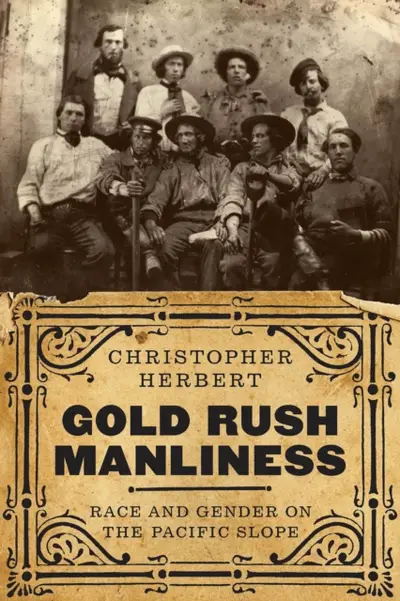
The mid-nineteenth-century gold rushes bring to mind raucous mining camps and slapped-together cities populated by carousing miners, gamblers, and prostitutes. Yet many of the white men who went to the gold fields were products of the Victorian era: educated men who valued morality and order. Examining the closely linked gold rushes in California and British Columbia, historian Christopher Herbert shows that these men worried about the meaning of their manhood in the near-anarchic, ethnically mixed societies that grew up around the mines. As white gold rushers emigrated west, they encountered a wide range of people they considered inferior and potentially dangerous to white dominance, including Latin American, Chinese, and Indigenous peoples.The way that white miners interacted with these groups reflected their conceptions of race and morality, as well as the distinct political principles and strategies of the US and British colonial governments. The white miners were accustomed to white male domination, and their anxiety to continue it played a central role in the construction of colonial regimes. In addition to renovating traditional understandings of the Pacific Slope gold rushes, Herbert argues that historians understanding of white manliness has been too fixated on the eastern United States and Britain. In the nineteenth century, popular attention largely focused on the West. It was in the gold fields and the cities they spawned that new ideas of white manliness emerged, prefiguring transformations elsewhere.
Bibliographic data © Gardners Books Ltd.