EPUB · English
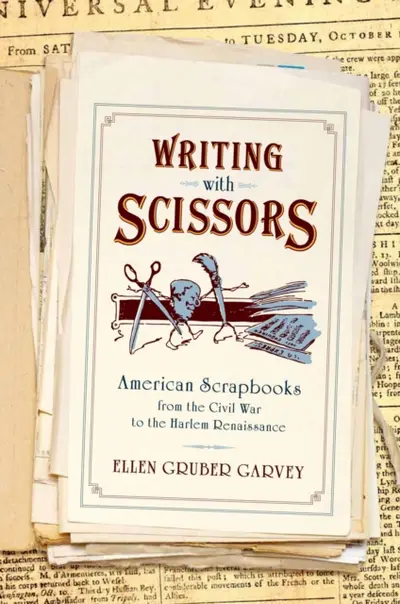
Writing with Scissors
American Scrapbooks from the Civil War to the Harlem Renaissance
Price and availability
$45.99
Available in: Andorra, Austria, Australia, Belgium, Bulgaria, Canada, Switzerland, Cyprus, Czechia, Germany, Denmark, Estonia, Spain, Finland, France, United Kingdom, Guernsey, Greece, Croatia, Hungary, Ireland, Isle of Man, Iceland, Italy, Jersey, Japan, Liechtenstein, Lithuania, Luxembourg, Latvia, Monaco, Malta, Netherlands, Norway, Poland, Portugal, Romania, Sweden, Slovenia, Slovakia, San Marino, United States, Vatican City, South Africa
Stores: US, UK, Canada, EU, Australia.
Sign in to buyThe price is re-checked by the server before payment.
For personal use under the eBook licence.
- Format
- EPUB
- DRM
- Not stated by the publisher
- Language
- English
- Publisher
- Oxford University Press
- Published
- 2 November 2012
- ISBN
- 9780199987023
- Subjects
- USA, Collage & photomontage, Literary studies: c 1800 to c 1900, Literary studies: from c 1900 -, Scrapbook keeping, United States of America, USA, AFJ, Literary studies: c 1800 to c 1900, Literary studies: c 1900 to c 2000, WFT
About this book
Men and women 150 years ago grappled with information overload by making scrapbooks-the ancestors of Google and blogging. From Abraham Lincoln to Susan B. Anthony, African American janitors to farmwomen, abolitionists to Confederates, people cut out and pasted down their reading. Writing with Scissors opens a new window into the feelings and thoughts of ordinary and extraordinary Americans. Like us, nineteenth-century readers spoke back to the media, and treasured what mattered to them. In this groundbreaking book, Ellen Gruber Garvey reveals a previously unexplored layer of American popular culture, where the proliferating cheap press touched the lives of activists and mourning parents, and all who yearned for a place in history. Scrapbook makers documented their feelings about momentous public events such as living through the Civil War, mediated through the newspapers. African Americans and women's rights activists collected, concentrated, and critiqued accounts from a press that they did not control to create "e;unwritten histories"e; in books they wrote with scissors. Whether scrapbook makers pasted their clippings into blank books, sermon collections, or the pre-gummed scrapbook that Mark Twain invented, they claimed ownership of their reading. They created their own democratic archives. Writing with Scissors argues that people have long had a strong personal relationship to media. Like newspaper editors who enthusiastically "e;scissorized"e; and reprinted attractive items from other newspapers, scrapbook makers passed their reading along to family and community. This book explains how their scrapbooks underlie our present-day ways of thinking about information, news, and what we do with it.
Bibliographic data © Gardners Books Ltd.