EPUB · English
Innocent Weapons
The Soviet and American Politics of Childhood in the Cold War
Price and availability
$70.99
Available in: Andorra, Austria, Australia, Belgium, Bulgaria, Canada, Switzerland, Cyprus, Czechia, Germany, Denmark, Estonia, Spain, Finland, France, United Kingdom, Guernsey, Greece, Croatia, Hungary, Ireland, Isle of Man, Iceland, Italy, Jersey, Japan, Liechtenstein, Lithuania, Luxembourg, Latvia, Monaco, Malta, Netherlands, Norway, Poland, Portugal, Romania, Sweden, Slovenia, Slovakia, San Marino, United States, Vatican City, South Africa
Stores: US, UK, Canada, EU, Australia.
Sign in to buyThe price is re-checked by the server before payment.
For personal use under the eBook licence.
- Format
- EPUB
- DRM
- Not stated by the publisher
- Language
- English
- Publisher
- The University of North Carolina Press
- Published
- 25 August 2014
- ISBN
- 9781469618593
- Subjects
- Russia, USA, 20th century, European history, History of the Americas, The Cold War, Age groups: children, Russia, United States of America, USA, Age groups: children, European history, History of the Americas
About this book
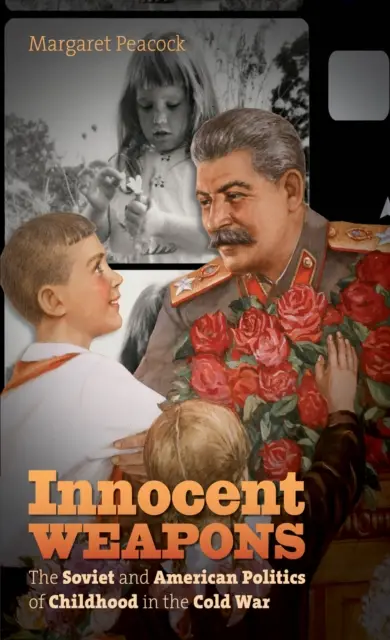
In the 1950s and 1960s, images of children appeared everywhere, from movies to milk cartons, their smiling faces used to sell everything, including war. In this provocative book, Margaret Peacock offers an original account of how Soviet and American leaders used emotionally charged images of children in an attempt to create popular support for their policies at home and abroad.Groups on either side of the Iron Curtain pushed visions of endangered, abandoned, and segregated children to indict the enemys state and its policies. Though the Cold War is often characterized as an ideological divide between the capitalist West and the communist East, Peacock demonstrates a deep symmetry in how Soviet and American propagandists mobilized similar images to similar ends, despite their differences. Based on extensive research spanning fourteen archives and three countries, Peacock tells a new story of the Cold War, seeing the conflict not simply as a divide between East and West, but as a struggle between the producers of culture and their target audiences.
Bibliographic data © Gardners Books Ltd.