PDF · English
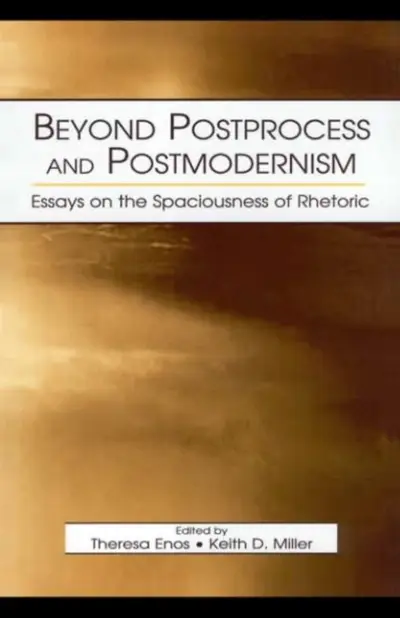
Beyond Postprocess and Postmodernism
Essays on the Spaciousness of Rhetoric
Price and availability
$50.99
Available in: Andorra, Austria, Australia, Belgium, Bulgaria, Canada, Switzerland, Cyprus, Czechia, Germany, Denmark, Estonia, Spain, Finland, France, United Kingdom, Guernsey, Greece, Croatia, Hungary, Ireland, Isle of Man, Iceland, Italy, Jersey, Japan, Liechtenstein, Lithuania, Luxembourg, Latvia, Monaco, Malta, Netherlands, Norway, Poland, Portugal, Romania, Sweden, Slovenia, Slovakia, San Marino, United States, Vatican City, South Africa
Stores: US, UK, Canada, EU, Australia.
Sign in to buyThe price is re-checked by the server before payment.
For personal use under the eBook licence.
- Format
- DRM
- Not stated by the publisher
- Language
- English
- Publisher
- Taylor & Francis
- Published
- 30 January 2003
- ISBN
- 9781135705558
- Subjects
- Technical writing, Semantics, discourse analysis, etc, Communication studies, Cultural studies, Communication studies, Media studies, News media and journalism
About this book
In this collection of original essays, editors Theresa Enos and Keith D. Miller join their contributors--a veritable "e;who's who"e; in composition scholarship--in seeking to illuminate and complicate many of the tensions present in the field of rhetoric and composition. The contributions included here emphasize key issues in past and present work, setting the stage for future thought and study. The book also honors the late Jim Corder, a major figure in the development of the rhetoric and composition discipline. In the spirit of Corder's unfinished work, the contributors to this volume absorb, probe, stretch, redefine, and interrogate classical, modern, and postmodern rhetorics--and challenge their limitations. Beyond Postprocess and Postmodernism: Essays on the Spaciousness of Rhetoric will be of interest to scholars, teachers, and students in rhetoric and composition, English, and communication studies. Offering a provocative discussion of postprocess composition theories and pedagogies and postmodern rhetorics, as well as the first thorough consideration of Jim Corder's contributions, this work is certain to influence the course of future study and research.
Bibliographic data © Gardners Books Ltd.