EPUB · English
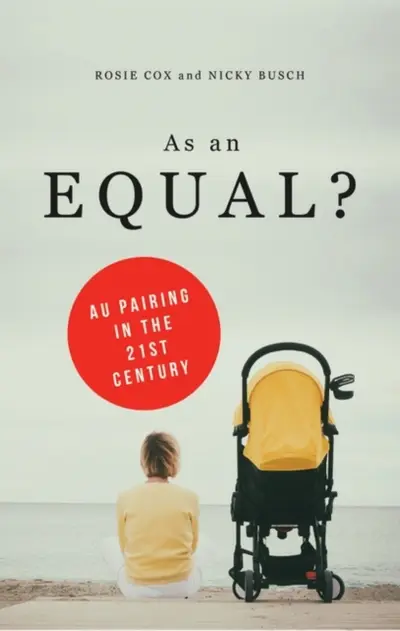
As an Equal?
Au Pairing in the 21st Century
Price and availability
$30.99
Available in: Andorra, Austria, Australia, Belgium, Bulgaria, Canada, Switzerland, Cyprus, Czechia, Germany, Denmark, Estonia, Spain, Finland, France, United Kingdom, Guernsey, Greece, Croatia, Hungary, Ireland, Isle of Man, Iceland, Italy, Jersey, Japan, Liechtenstein, Lithuania, Luxembourg, Latvia, Monaco, Malta, Netherlands, Norway, Poland, Portugal, Romania, Sweden, Slovenia, Slovakia, San Marino, United States, Vatican City, South Africa
Stores: US, UK, Canada, EU, Australia.
Sign in to buyThe price is re-checked by the server before payment.
For personal use under the eBook licence.
- Format
- EPUB
- DRM
- Not stated by the publisher
- Language
- English
- Publisher
- Bloomsbury Publishing
- Published
- 15 November 2018
- Pages
- 208
- ISBN
- 9781783605002
- Subjects
- Migration, immigration & emigration, Gender studies: women, Sociology, Sociology: work & labour, JBFH, JBSF1, Sociology, Sociology: work and labour
About this book
Au pairs are relied upon by tens of thousands of UK families to do everything from childcare and housework to elder care, pet feeding and waiting at dinner parties. Traditionally thought of as privileged and well-educated young women having fun on a 'gap year' abroad, au pairs have been excluded from many of the recent discussions on migrant domestic labour. However, since 2008 au pairing has been effectively unregulated in the UK and the result is that au pairs now constitute one of the poorest paid and least protected groups of workers.Through an examination of lived experiences, As an Equal? draws on detailed research to examine au pairs and the families who host them in contemporary Britain, revealing au pairing to have become increasingly indistinguishable from other forms of domestic labour. Crucially, hosting an au pair is shown to form part of families' attempts to provide good (enough) childcare in the context of extended working hours and poor public childcare provision. This increased reliance of families on an exploited workforce is shown to form part of the wider political climate of economic austerity, and raises profound questions about the position of women within the neoliberal economy.
Bibliographic data © Gardners Books Ltd.