PDF · English
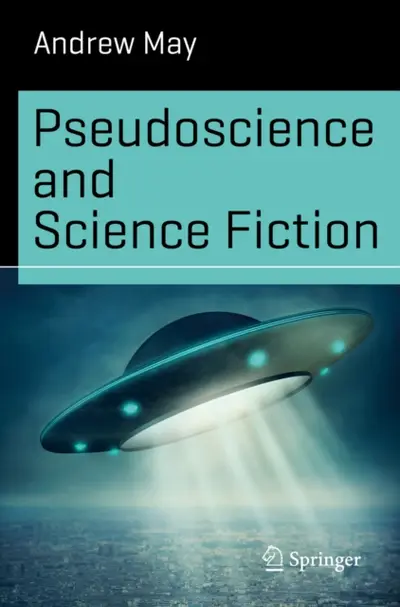
Pseudoscience and Science Fiction
- Fiction
- Literary studies & poetry
- Science & mathematics
- Nature, environment & geography
- Reference
- Lifestyle, food & travel
Price and availability
$27.99
Available in: Andorra, Austria, Australia, Belgium, Bulgaria, Canada, Switzerland, Cyprus, Czechia, Germany, Denmark, Estonia, Spain, Finland, France, United Kingdom, Guernsey, Greece, Croatia, Hungary, Ireland, Isle of Man, Iceland, Italy, Jersey, Japan, Liechtenstein, Lithuania, Luxembourg, Latvia, Monaco, Malta, Netherlands, Norway, Poland, Portugal, Romania, Sweden, Slovenia, Slovakia, San Marino, United States, Vatican City, South Africa
Stores: US, UK, Canada, EU, Australia.
Sign in to buyThe price is re-checked by the server before payment.
For personal use under the eBook licence.
- Format
- DRM
- Not stated by the publisher
- Language
- English
- Publisher
- Springer International Publishing
- Published
- 13 September 2016
- ISBN
- 9783319426051
- Subjects
- Literary studies: fiction, novelists & prose writers, Modern & contemporary fiction (post c 1945), Science: general issues, Philosophy of science, Astronomy, space & time, Physics, Astrophysics, Natural history, Miscellaneous items, Fiction, Interdisciplinary studies, Mathematics and Science, Philosophy of science, Astronomy, space and time, Environmentalist thought and ideology
About this book
Aliens, flying saucers, ESP, the Bermuda Triangle, antigravity ... are we talking about science fiction or pseudoscience? Sometimes it is difficult to tell the difference. Both pseudoscience and science fiction (SF) are creative endeavours that have little in common with academic science, beyond the superficial trappings of jargon and subject matter. The most obvious difference between the two is that pseudoscience is presented as fact, not fiction. Yet like SF, and unlike real science, pseudoscience is driven by a desire to please an audience - in this case, people who "e;want to believe"e;. This has led to significant cross-fertilization between the two disciplines. SF authors often draw on "e;real"e; pseudoscientific theories to add verisimilitude to their stories, while on other occasions pseudoscience takes its cue from SF - the symbiotic relationship between ufology and Hollywood being a prime example of this. This engagingly written, well researched and richly illustrated text explores a wide range of intriguing similarities and differences between pseudoscience and the fictional science found in SF. Andrew May has a degree in Natural Sciences from Cambridge University and a PhD in astrophysics from Manchester University. After many years in academia and the private sector, he now works as a freelance writer and scientific consultant. He has written pocket biographies of Newton and Einstein, as well as contributing to a number of popular science books. He has a lifelong interest in science fiction, and has had several articles published in Fortean Times magazine
Bibliographic data © Gardners Books Ltd.