PDF · English
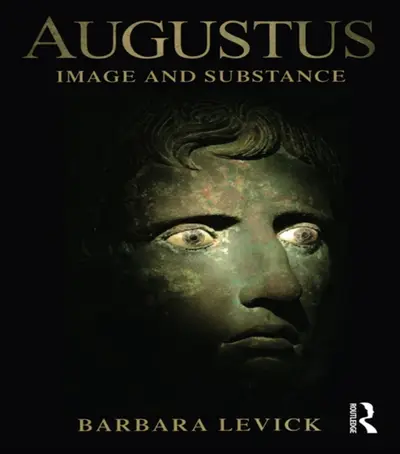
Augustus
Image and Substance
Price and availability
$70.99
Available in: Andorra, Austria, Australia, Belgium, Bulgaria, Canada, Switzerland, Cyprus, Czechia, Germany, Denmark, Estonia, Spain, Finland, France, United Kingdom, Guernsey, Greece, Croatia, Hungary, Ireland, Isle of Man, Iceland, Italy, Jersey, Japan, Liechtenstein, Lithuania, Luxembourg, Latvia, Monaco, Malta, Netherlands, Norway, Poland, Portugal, Romania, Sweden, Slovenia, Slovakia, San Marino, United States, Vatican City, South Africa
Stores: US, UK, Canada, EU, Australia.
Sign in to buyThe price is re-checked by the server before payment.
For personal use under the eBook licence.
- Format
- DRM
- Not stated by the publisher
- Language
- English
- Publisher
- Taylor & Francis
- Published
- 24 February 2014
- ISBN
- 9781317867449
- Subjects
- Ancient Rome, Autobiography: historical, political & military, General & world history, European history, Ancient history: to c 500 CE, Classical history / classical civilisation, Ancient Rome, Biography: historical, political and military, Ancient history, European history: the Romans
About this book
Throughout a long and spectacularly successful political life, the Emperor Augustus (63BC-AD14) was a master of spin. Barbara Levick exposes the techniques which he used to disguise the ruthlessness of his rise to power and to enhance his successes once power was achieved.There was, she argues, less difference than might appear between the ambitious youth who overthrew Anthony and Cleopatra and the admired Emperor of later years. However seemingly benevolent his autocracy and substantial his achievements, Augustus' overriding purpose was always to keep himself and his dynasty in power. Similar techniques were practised against surviving and fresh opponents, but with increasing skill and duplicity, and in the end the exhausted members of the political classes were content to accept their new ruler. This book charts the stages of Augustus' rise, the evolution of his power and his methods of sustaining it, and finally the ways in which he used artists and literary men to glorify his image for his own time and times to come. This fascinating story of the realities of power in ancient Rome has inescapable contemporary resonance and will appeal equally to students of the Ancient World and to the general reader.
Bibliographic data © Gardners Books Ltd.