EPUB · English
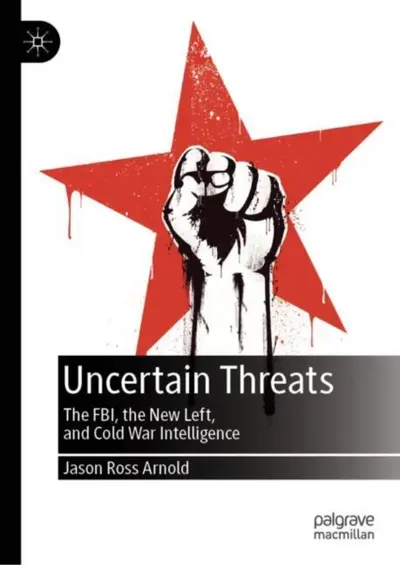
Uncertain Threats
The FBI, the New Left, and Cold War Intelligence
Price and availability
$148.99
Available in: Andorra, Austria, Australia, Belgium, Bulgaria, Canada, Switzerland, Cyprus, Czechia, Germany, Denmark, Estonia, Spain, Finland, France, United Kingdom, Guernsey, Greece, Croatia, Hungary, Ireland, Isle of Man, Iceland, Italy, Jersey, Japan, Liechtenstein, Lithuania, Luxembourg, Latvia, Monaco, Malta, Netherlands, Norway, Poland, Portugal, Romania, Sweden, Slovenia, Slovakia, San Marino, United States, Vatican City, South Africa
Stores: US, UK, Canada, EU, Australia.
Sign in to buyThe price is re-checked by the server before payment.
For personal use under the eBook licence.
- Format
- EPUB
- DRM
- Not stated by the publisher
- Language
- English
- Publisher
- Springer Nature Switzerland
- Published
- 30 September 2025
- ISBN
- 9783031980879
- Subjects
- USA, c 1945 to c 2000 (Post-war period), Postwar 20th century history, from c 1945 to c 2000, History: specific events & topics, Police & security services, Politics & government, Political science & theory, Constitution: government & the state, Central government, Military intelligence, The Americas, Politics and government, Political science and theory, History: specific events and topics
About this book
What if the FBI’s surveillance of the New Left wasn’t only about repression and cynical self-interest? This book revisits one of the most controversial episodes of the Cold War: the FBI’s counterintelligence investigations into the activist leaders of SDS and other radical groups. While scholars have rightly emphasized political overreach, constitutional violations, and the Bureau’s institutional self-interest, newly declassified documents reveal that it also possessed a stream of intelligence — often fragmentary, sometimes credible — that pointed to international ties many scholars have overlooked or discounted. Through close historical analysis of this evolving intelligence picture, the book complicates the dominant narrative of Hoover-era surveillance. It shows how the FBI and other agencies perceived the New Left’s developing connections to Cuba, North Vietnam, and other Communist powers, and why they came to see those ties as potential counterintelligence threats. Rather than defending the Bureau’s conduct, the book seeks to understand it on its own terms, emphasizing how counterintelligence agencies operate amid deep uncertainty and limited oversight. In doing so, it offers a new perspective on the internationalization of the New Left, the nature of foreign influence, and the machinery of Cold War security. A work of historical and analytical recovery, it challenges prevailing narratives in U.S. political history, intelligence studies, and the historiography of the 1960s.
Bibliographic data © Gardners Books Ltd.