PDF · English
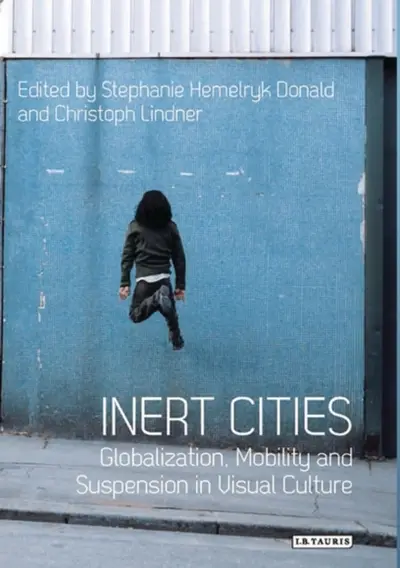
Inert Cities
Globalization, Mobility and Suspension in Visual Culture
Price and availability
$31.99
Available in: Andorra, Austria, Australia, Belgium, Bulgaria, Canada, Switzerland, Cyprus, Czechia, Germany, Denmark, Estonia, Spain, Finland, France, United Kingdom, Guernsey, Greece, Croatia, Hungary, Ireland, Isle of Man, Iceland, Italy, Jersey, Japan, Liechtenstein, Lithuania, Luxembourg, Latvia, Monaco, Malta, Netherlands, Norway, Poland, Portugal, Romania, Sweden, Slovenia, Slovakia, San Marino, United States, Vatican City, South Africa
Stores: US, UK, Canada, EU, Australia.
Sign in to buyThe price is re-checked by the server before payment.
For personal use under the eBook licence.
- Format
- DRM
- Not stated by the publisher
- Language
- English
- Publisher
- Bloomsbury Publishing
- Published
- 1 October 2014
- Pages
- 256
- ISBN
- 9780857725790
- Subjects
- Theory of art, Film theory & criticism, Cultural studies, Media studies, Urban communities, Theory of art, ATFA, JBCC, JBCT, JBSD
About this book
We usually associate contemporary urban life with movement and speed. But what about those instances when the forms of mobility associated with globalized cities the flow of capital, people, labour and information freeze, or decelerate? How can we assess the value of interruption in a city? What does valuing stillness mean in regards to the forward march of globalization? When does inertia presage decay - and when does it promise immanence and rebirth?Bringing together original contributions by international specialists from the fields of architecture, photography, film, sociology and cultural analysis, this cutting-edge book considers the poetics and politics of inertia in cities ranging from Amsterdam, Berlin, Beirut and Paris, to Beijing, New York, Sydney and Tokyo. Chapters explore what happens when photography, film, mixed media works, architecture and design intervene in public spaces and urban communities to disrupt speed and growth, both intellectually and/or practically; and question the degree to which mobility is aspirational or imaginary, absolute or transient. Together, they encourage a re-assessment of what it means to be urban in an unevenly globalizing world, to live in cities built around mythologies of perpetual progress. These new analyses of visual culture's strategic interruptions in global cities allow a more in-depth understanding of the new forms of space, experience, and community that are emerging in today's rapidly transforming urban environments.
Bibliographic data © Gardners Books Ltd.