EPUB · English
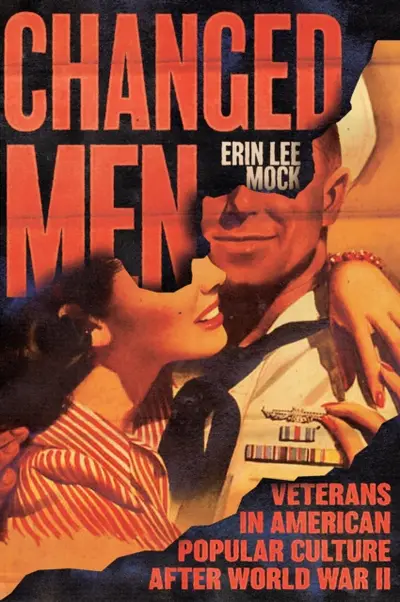
Changed Men
Veterans in American Popular Culture after World War II
Price and availability
$53.99
Available in: Andorra, Austria, Australia, Belgium, Bulgaria, Canada, Switzerland, Cyprus, Czechia, Germany, Denmark, Estonia, Spain, Finland, France, United Kingdom, Guernsey, Greece, Croatia, Hungary, Ireland, Isle of Man, Iceland, Italy, Jersey, Japan, Liechtenstein, Lithuania, Luxembourg, Latvia, Monaco, Malta, Netherlands, Norway, Poland, Portugal, Romania, Sweden, Slovenia, Slovakia, San Marino, United States, Vatican City, South Africa
Stores: US, UK, Canada, EU, Australia.
Sign in to buyThe price is re-checked by the server before payment.
For personal use under the eBook licence.
- Format
- EPUB
- DRM
- Not stated by the publisher
- Language
- English
- Publisher
- University of Virginia Press
- Published
- 28 June 2024
- ISBN
- 9780813950969
- Subjects
- USA, c 1945 to c 2000 (Post-war period), Literary studies: from c 1900 -, History of the Americas, Postwar 20th century history, from c 1945 to c 2000, Popular culture, United States of America, USA, 3MPQ, Literary studies: c 1900 to c 2000, JBCC1, NH, NHK
About this book
Postwar culture and anxiety over the reintegration of veterans into American society Millions of GIs returned from overseas in 1945. A generation of men who had left their families and had learned to kill and to quickly dispatch sexual urges were rapidly reintegrated into civilian life, told to put the war behind them with cheer and confidence. Many veterans struggled, openly or privately, with this transition. Others in society wondered what the war had wrought in them. As Erin Lee Mock shows in this insightful book, the ';explosive' potential of men became a central concern of postwar American culture. This wariness of veterans settled into a generalized anxiety over men's ';inherent' violence and hypersexuality, which increasingly came to define masculinity. Changed Men engages with studies of film, media, literature, and gender and sexuality to advance a new perspective on the artistic and cultural output of and about the ';Greatest Generation,' arguing that depictions of men's violent and erotic potential emerged differently in different forms and genres but nonetheless permeated American culture in these years. Viewing this homecoming through the lenses of war and trauma, classical Hollywood, pulp fiction, periodical culture, and early television, Mock shows this history in a provocative new light.
Bibliographic data © Gardners Books Ltd.