PDF · root
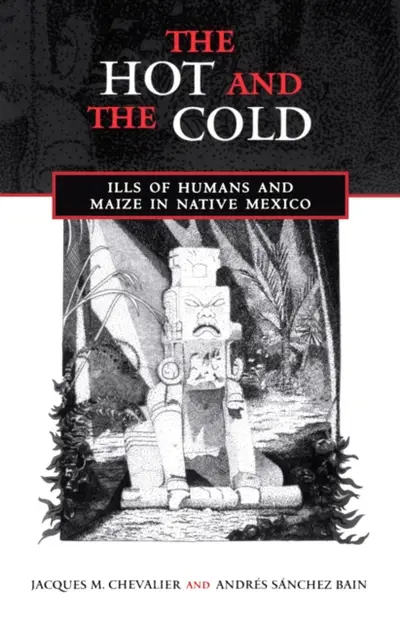
The Hot and the Cold
Ills of Humans and Maize in Native Mexico
Price and availability
$120.99
Available in: Andorra, Austria, Australia, Belgium, Bulgaria, Canada, Switzerland, Cyprus, Czechia, Germany, Denmark, Estonia, Spain, Finland, France, United Kingdom, Guernsey, Greece, Croatia, Hungary, Ireland, Isle of Man, Iceland, Italy, Jersey, Japan, Liechtenstein, Lithuania, Luxembourg, Latvia, Monaco, Malta, Netherlands, Norway, Poland, Portugal, Romania, Sweden, Slovenia, Slovakia, San Marino, United States, Vatican City, South Africa
Stores: US, UK, Canada, EU, Australia.
Sign in to buyThe price is re-checked by the server before payment.
For personal use under the eBook licence.
- Format
- DRM
- Not stated by the publisher
- Language
- root
- Publisher
- University of Toronto Press
- Published
- 21 March 2003
- Pages
- 344
- ISBN
- 9781442681460
- Subjects
- Mexico, Folklore, myths & legends, Indigenous peoples, Social & cultural anthropology, ethnography, Complementary therapies, healing & health, Mexico, JBGB, JBSL11, Social and cultural anthropology, Complementary therapies, healing and health
About this book
Pre-Hispanic notions of heat and cold continue to shape native Mexican ideas about health and illness in humans and food plants. In The Hot and the Cold, Jacques Chevalier and Andrés Sánchez Bain examine indigenous worldview and myth, and challenge the prevailing notion that hot-cold reasoning in Latin America is a product of the Hippocratic humoral doctrine brought by the Spaniards in the sixteenth century. Based on extensive field work in southern Veracruz, this innovative study details folk tales and stories of illness from indigenous people, and provides explanations that emphasize the close connections between healing practices, milpa cultivation, and corn mythology. These close connections reveal that human health and the life cycle of the corn plant are governed by the same principles founded on native concepts of the hot and the cold. Notions of what is frío and what is caliente pervade the ways in which the Nahuas and Zoque-Popolucas of the Sierra de Santa Marta think about their relationship with the land and all entities that surround them, including fellow humans, plants, animals, and spirits. By revealing the connections between ethnomedicine, agriculture, and mythology, Chevalier and Sánchez help clarify puzzling aspects of Mesoamerican religion and symbolic thought, and lead the way towards better understanding of indigenous worldview in the modern world.
Bibliographic data © Gardners Books Ltd.