PDF · English
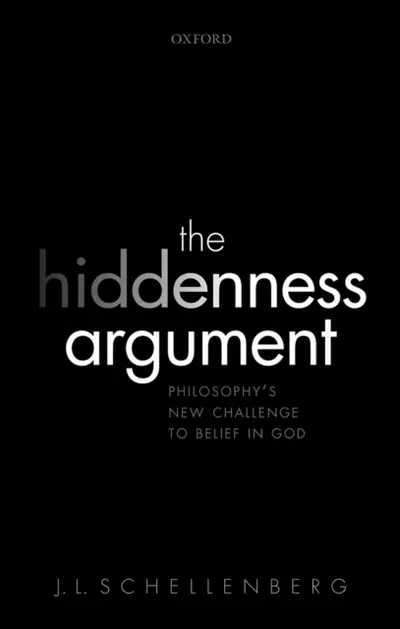
Hiddenness Argument
Philosophy's New Challenge to Belief in God
Price and availability
$21.99
Available in: Andorra, Austria, Australia, Belgium, Bulgaria, Canada, Switzerland, Cyprus, Czechia, Germany, Denmark, Estonia, Spain, Finland, France, United Kingdom, Guernsey, Greece, Croatia, Hungary, Ireland, Isle of Man, Iceland, Italy, Jersey, Japan, Liechtenstein, Lithuania, Luxembourg, Latvia, Monaco, Malta, Netherlands, Norway, Poland, Portugal, Romania, Sweden, Slovenia, Slovakia, San Marino, United States, Vatican City, South Africa
Stores: US, UK, Canada, EU, Australia.
Sign in to buyThe price is re-checked by the server before payment.
For personal use under the eBook licence.
- Format
- DRM
- Not stated by the publisher
- Language
- English
- Publisher
- Oxford University Press
- Published
- 2 July 2015
- ISBN
- 9780191047374
- Subjects
- Philosophy, Nature & existence of God, Christian theology, Philosophy, Nature and existence of God and of the Divine, Christianity, Theology
About this book
In many places and times, and for many people, God's existence has been rather less than a clear fact. According to the hiddenness argument, this is actually a reason to suppose that it is not a fact at all. The hiddenness argument is a new argument for atheism that has come to prominence in philosophy over the past two decades. J. L. Schellenberg first developed the argument in 1993, and this book offers a short and vigorous statement of its central claims and ideas. Logically sharp but so clear that anyone can understand, the book addresses little-discussed issues such as why it took so long for hiddenness reasoning to emerge in philosophy, and how the hiddenness problem is distinct from the problem of evil. It concludes with the fascinating thought that retiring the last of the personal gods might leave us nearer the beginning of religion than the end. Though an atheist, Schellenberg writes sensitively and with a nuanced insider's grasp of the religious life. Pertinent aspects of his experience as a believer and as a nonbeliever, and of his own engagement with hiddenness issues, are included. Set in this personal context, and against an authoritative background on relevant logical, conceptual, and historical matters, The Hiddenness Argument's careful but provocative reasoning makes crystal clear just what this new argument is and why it matters.
Bibliographic data © Gardners Books Ltd.