PDF · English
Understanding Namibia
The Trials of Independence
Price and availability
$19.99
Available in: Andorra, Austria, Australia, Belgium, Bulgaria, Canada, Switzerland, Cyprus, Czechia, Germany, Denmark, Estonia, Spain, Finland, France, United Kingdom, Guernsey, Greece, Croatia, Hungary, Ireland, Isle of Man, Iceland, Italy, Jersey, Japan, Liechtenstein, Lithuania, Luxembourg, Latvia, Monaco, Malta, Netherlands, Norway, Poland, Portugal, Romania, Sweden, Slovenia, Slovakia, San Marino, United States, Vatican City, South Africa
Stores: US, UK, Canada, EU, Australia.
Sign in to buyThe price is re-checked by the server before payment.
For personal use under the eBook licence.
- Format
- DRM
- Not stated by the publisher
- Language
- English
- Publisher
- Oxford University Press
- Published
- 4 January 2015
- ISBN
- 9780190257347
- Subjects
- Southern Africa, Republic of South Africa, USA, African history, Political parties, Central government, United States of America, USA, Political parties and party platforms, Central / national / federal government, NHH
About this book
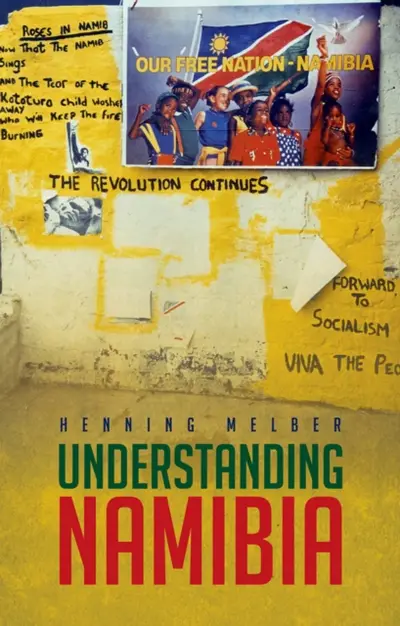
Since independence in 1990, Namibia has witnessed only one generation with no memory of colonialism - the 'born frees', who voted in the 2009 elections. The anti-colonial liberation movement, SWAPO, dominates the political scene, effectively making Namibia a de facto one-party state dominated by the first 'struggle generation'. While those in power declare their support for a free, fair, and just society, the limits to liberation are such that emancipation from foreign rule has only been partially achieved. Despite its natural resources Namibia is among the world's most unequal societies and indicators of wellbeing have not markedly improved for many among the former colonized majority, despite a constitution enshrining human rights, social equality, and individual liberty. This book analyses the transformation of Namibian society since Independence. Melber explores the achievements and failures and contrasts the narrative of a post-colonial patriotic history with the socio-economic and political realities of the nation-building project. He also investigates whether, notwithstanding the relative stability prevailing to date, the negotiation of controlled change during Namibia's decolonization could have achieved more than simply a change of those in control.
Bibliographic data © Gardners Books Ltd.