PDF · English
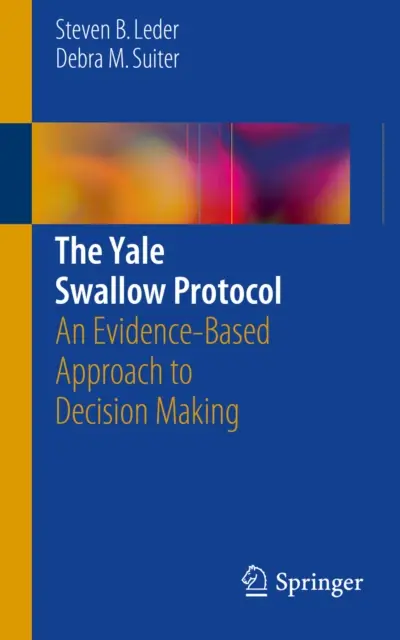
Yale Swallow Protocol
An Evidence-Based Approach to Decision Making
Price and availability
$87.99
Available in: Andorra, Austria, Australia, Belgium, Bulgaria, Canada, Switzerland, Cyprus, Czechia, Germany, Denmark, Estonia, Spain, Finland, France, United Kingdom, Guernsey, Greece, Croatia, Hungary, Ireland, Isle of Man, Iceland, Italy, Jersey, Japan, Liechtenstein, Lithuania, Luxembourg, Latvia, Monaco, Malta, Netherlands, Norway, Poland, Portugal, Romania, Sweden, Slovenia, Slovakia, San Marino, United States, Vatican City, South Africa
Stores: US, UK, Canada, EU, Australia.
Sign in to buyThe price is re-checked by the server before payment.
For personal use under the eBook licence.
- Format
- DRM
- Not stated by the publisher
- Language
- English
- Publisher
- Springer International Publishing
- Published
- 14 May 2014
- ISBN
- 9783319051130
- Subjects
- Oncology, Gastroenterology, Neurology & clinical neurophysiology, Otorhinolaryngology (ENT), Geriatric medicine, Speech & language disorders & therapy, Oncology, Otorhinolaryngology (ENT), Neurology and clinical neurophysiology, Geriatric medicine, Speech and language disorders and therapy
About this book
The Yale Swallow Protocol is an evidence-based protocol that is the only screening instrument that both identifies aspiration risk and, when passed, is able to recommend specific oral diets without the need for further instrumental dysphagia testing. Based upon research by Drs. Steven B. Leder and Debra M. Suiter, an easily administered, reliable and validated swallow screening protocol was developed and can be used by speech-language pathologists, nurses, otolaryngologists, oncologists, neurologists, intensivists and physicians assistants. In addition, the protocol can be used in a variety of environments, including acute care, rehabilitation and nursing homes. The Yale Swallow Protocol meets all of the criteria necessary for a successful screening test, including being simple to administer, cross-disciplinary, cost effective, acceptable to patients and able to identify the target attribute by giving a positive finding when aspiration risk is present and a negative finding when aspiration risk is absent. Additionally, early and accurate identification of aspiration risk can significantly reduce health-care costs associated with recognized prandial aspiration.
Bibliographic data © Gardners Books Ltd.