EPUB · English
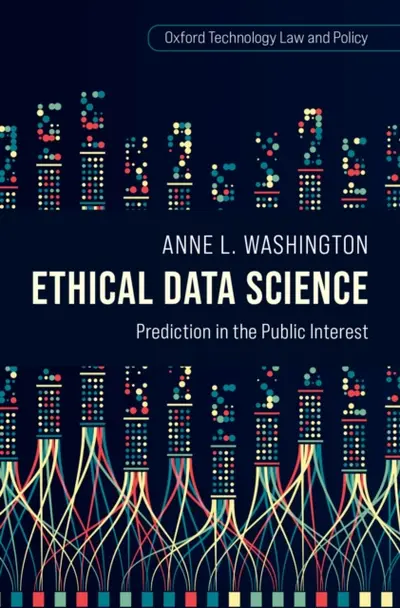
Ethical Data Science
Prediction in the Public Interest
Price and availability
$27.99
Available in: Andorra, Austria, Australia, Belgium, Bulgaria, Canada, Switzerland, Cyprus, Czechia, Germany, Denmark, Estonia, Spain, Finland, France, United Kingdom, Guernsey, Greece, Croatia, Hungary, Ireland, Isle of Man, Iceland, Italy, Jersey, Japan, Liechtenstein, Lithuania, Luxembourg, Latvia, Monaco, Malta, Netherlands, Norway, Poland, Portugal, Romania, Sweden, Slovenia, Slovakia, San Marino, United States, Vatican City, South Africa
Stores: US, UK, Canada, EU, Australia.
Sign in to buyThe price is re-checked by the server before payment.
For personal use under the eBook licence.
- Format
- EPUB
- DRM
- Not stated by the publisher
- Language
- English
- Publisher
- Oxford University Press
- Published
- 17 November 2023
- ISBN
- 9780197693056
- Subjects
- Ethics & moral philosophy, Law & society, IT & Communications law, Computer science, Law and society, sociology of law, Digital, IT and Communications law, QDTQ, Computer science
About this book
Can data science truly serve the public interest? Data-driven analysis shapes many interpersonal, consumer, and cultural experiences yet scientific solutions to social problems routinely stumble. All too often, predictions remain solely a technocratic instrument that sets financial interests against service to humanity. Amidst a growing movement to use science for positive change, Anne L. Washington offers a solution-oriented approach to the ethical challenges of data science. Ethical Data Science empowers those striving to create predictive data technologies that benefit more people. As one of the first books on public interest technology, it provides a starting point for anyone who wants human values to counterbalance the institutional incentives that drive computational prediction. It argues that data science prediction embeds administrative preferences that often ignore the disenfranchised. The book introduces the prediction supply chain to highlight moral questions alongside the interlocking legal and commercial interests influencing data science. Structured around a typical data science workflow, the book systematically outlines the potential for more nuanced approaches to transforming data into meaningful patterns. Drawing on arts and humanities methods, it encourages readers to think critically about the full human potential of data science step-by-step. Situating data science within multiple layers of effort exposes dependencies while also pinpointing opportunities for research ethics and policy interventions. This approachable process lays the foundation for broader conversations with a wide range of audiences. Practitioners, academics, students, policy makers, and legislators can all learn how to identify social dynamics in data trends, reflect on ethical questions, and deliberate over solutions. The book proves the limits of predictive technology controlled by the few and calls for more inclusive data science.
Bibliographic data © Gardners Books Ltd.