PDF · English
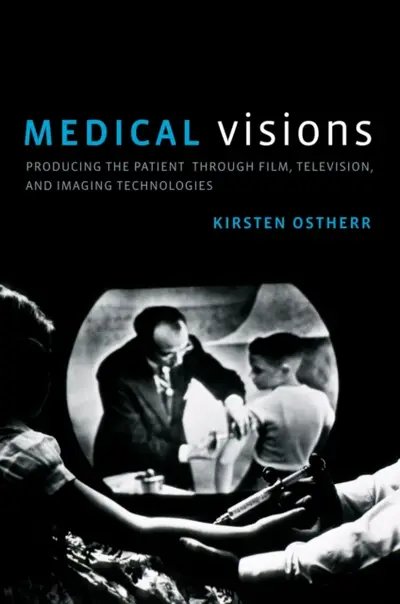
Medical Visions
Producing the Patient Through Film, Television, and Imaging Technologies
Price and availability
$43.99
Available in: Andorra, Austria, Australia, Belgium, Bulgaria, Canada, Switzerland, Cyprus, Czechia, Germany, Denmark, Estonia, Spain, Finland, France, United Kingdom, Guernsey, Greece, Croatia, Hungary, Ireland, Isle of Man, Iceland, Italy, Jersey, Japan, Liechtenstein, Lithuania, Luxembourg, Latvia, Monaco, Malta, Netherlands, Norway, Poland, Portugal, Romania, Sweden, Slovenia, Slovakia, San Marino, United States, Vatican City, South Africa
Stores: US, UK, Canada, EU, Australia.
Sign in to buyThe price is re-checked by the server before payment.
For personal use under the eBook licence.
- Format
- DRM
- Not stated by the publisher
- Language
- English
- Publisher
- Oxford University Press
- Published
- 11 March 2013
- ISBN
- 9780199876235
- Subjects
- Films, cinema, Media studies, Health systems & services, Medical sociology, ATF, JBCT, Health systems and services, Medical sociology
About this book
How do visual images shape the practice of medicine? What role does visual representation play in the cultivation of medical ways of seeing? And how has medicine's visual culture changed in the digital age? Kirsten Ostherr's ambitious study explores 120 years of medical image-making to explain how visual representations shape medical education and practice. Marshaling powerful, vivid examples she demonstrates how medical images created by the healthcare industry, documentary filmmakers, experimental artists, and the mass media acquire cultural meaning and influence doctors' and patients' understandings of health and disease. Her analysis proceeds chronologically, turning from the earliest experiments with medical filmmaking by the American College of Surgeons, to the place of health films in the "e;golden age"e; of instructional film in the 1960s. Ostherr considers the shift to television as the dominant medium of health education, highlighting the evolving status of realism, the techniques employed to bridge the entertainment-education divide, the role of expert consultants and sponsors, and the tradeoffs made by professionals to reach a broad audience. The rise of physician advice segments on newsmagazines forms a transition between medical dramas like Marcus Welby, MD and more recent reality shows like Boston Med and Doctor 90210. Concluding with a section on advertising and social media in the health care setting, the book ends with ten key lessons for the future of medical media.
Bibliographic data © Gardners Books Ltd.