PDF · English
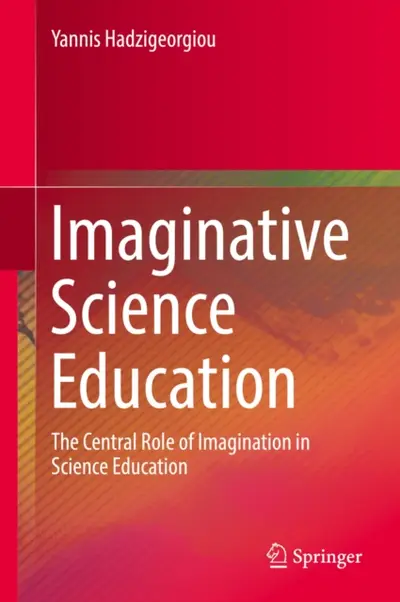
Imaginative Science Education
The Central Role of Imagination in Science Education
Price and availability
$120.99
Available in: Andorra, Austria, Australia, Belgium, Bulgaria, Canada, Switzerland, Cyprus, Czechia, Germany, Denmark, Estonia, Spain, Finland, France, United Kingdom, Guernsey, Greece, Croatia, Hungary, Ireland, Isle of Man, Iceland, Italy, Jersey, Japan, Liechtenstein, Lithuania, Luxembourg, Latvia, Monaco, Malta, Netherlands, Norway, Poland, Portugal, Romania, Sweden, Slovenia, Slovakia, San Marino, United States, Vatican City, South Africa
Stores: US, UK, Canada, EU, Australia.
Sign in to buyThe price is re-checked by the server before payment.
For personal use under the eBook licence.
- Format
- DRM
- Not stated by the publisher
- Language
- English
- Publisher
- Springer International Publishing
- Published
- 26 May 2016
- ISBN
- 9783319295268
- Subjects
- Educational psychology, Teacher training, Teaching of a specific subject, Science: general issues, Educational psychology, Teacher training, Teaching of a specific subject, Science: general issues
About this book
This book is about imaginative approaches to teaching and learning school science. Its central premise is that science learning should reflect the nature of science, and therefore be approached as an imaginative/creative activity. As such, the book can be seen as an original contribution of ideas relating to imagination and creativity in science education.The approaches discussed in the book are storytelling, the experience of wonder, the development of 'romantic understanding', and creative science, including science through visual art, poetry and dramatization. However, given the perennial problem of how to engage students (of all ages) in science, the notion of 'aesthetic experience', and hence the possibility for students to have more holistic and fulfilling learning experiences through the aforementioned imaginative approaches, is also discussed.Each chapter provides an in-depth discussion of the theoretical background of a specific imaginative approach (e.g., storytelling, 'wonder-full' science), reviews the existing empirical evidence regarding its role in the learning process, and points out its implications for pedagogy and instructional practices. Examples from physical science illustrating its implementation in the classroom are also discussed.In distinguishing between 'participation in a science activity' and 'engagement with science ideas per se', the book emphasizes the central role of imaginative engagement with science content knowledge, and thus the potential of the recommended imaginative approaches to attract students to the world of science.
Bibliographic data © Gardners Books Ltd.