PDF · English
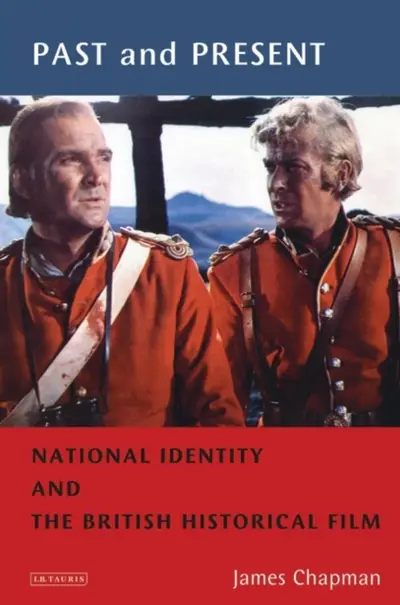
Past and Present
National Identity and the British Historical Film
Price and availability
$32.99
Available in: Andorra, Austria, Australia, Belgium, Bulgaria, Canada, Switzerland, Cyprus, Czechia, Germany, Denmark, Estonia, Spain, Finland, France, United Kingdom, Guernsey, Greece, Croatia, Hungary, Ireland, Isle of Man, Iceland, Italy, Jersey, Japan, Liechtenstein, Lithuania, Luxembourg, Latvia, Monaco, Malta, Netherlands, Norway, Poland, Portugal, Romania, Sweden, Slovenia, Slovakia, San Marino, United States, Vatican City, South Africa
Stores: US, UK, Canada, EU, Australia.
Sign in to buyThe price is re-checked by the server before payment.
For personal use under the eBook licence.
- Format
- DRM
- Not stated by the publisher
- Language
- English
- Publisher
- Bloomsbury Publishing
- Published
- 23 September 2005
- Pages
- 224
- ISBN
- 9780857715579
- Subjects
- Film, TV & radio, General & world history, ATF, NHB
About this book
This ground-breaking book takes as its focal point director Ken Loach's view that 'The only reason to make films that are a reflection on history is to talk about the present.' In the first book to take on this major genre in all its complexity, James Chapman argues that historical films say as much about the times in which they are made as about the past they purport to portray. Through in-depth case studies of fourteen key films spanning the 1930s up to the turn of the twenty first century, from The Private Life of Henry VIII and Zulu to Chariots of Fire and Elizabeth, Chapman examines the place of historical films in British cinema history and film culture. Looking closely at the issues that they present, from gender, class and ethnicity to militarism and imperialism, he also discusses controversies over historical accuracy, and the ways in which devices such as voice overs, title captions, and visual references to photographs and paintings assert a sense of historical verisimilitude.Exploring throughout the book the dialectical relationship between past and present, Chapman reveals how such films promote British achievements - but also sometimes question them - and how they project images of 'Britishness' to audiences both in the UK and internationally.
Bibliographic data © Gardners Books Ltd.