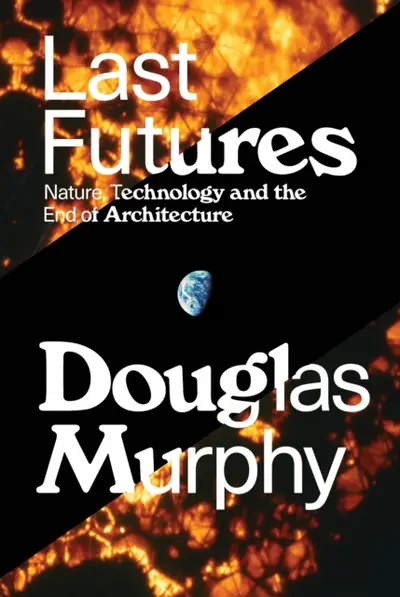
EPUB · English
Last Futures
Nature, Technology and the End of Architecture
Price and availability
Not sold in this region
Available in: Andorra, Austria, Australia, Belgium, Bulgaria, Switzerland, Cyprus, Czechia, Germany, Denmark, Estonia, Spain, Finland, France, United Kingdom, Guernsey, Greece, Croatia, Hungary, Ireland, Isle of Man, Iceland, Italy, Jersey, Japan, Liechtenstein, Lithuania, Luxembourg, Latvia, Monaco, Malta, Netherlands, Norway, Poland, Portugal, Romania, Sweden, Slovenia, Slovakia, San Marino, Vatican City, South Africa
Stores: UK, EU, Australia. Not available in the United States store.
This title cannot be bought in this store yet: its supplier terms, territorial rights or price are still being confirmed.
For personal use under the eBook licence.
- Format
- EPUB
- DRM
- Not stated by the publisher
- Language
- English
- Publisher
- Verso
- Published
- 12 January 2016
- ISBN
- 9781781689806
- Subjects
- History of architecture, Social & cultural history, Social & political philosophy, Social forecasting, future studies, Impact of science & technology on society, Social forecasting, future studies, Social and cultural history, Impact of science and technology on society
About this book
In the late 1960s the world was faced with impending disaster: the height of the Cold War, the end of oil, and the decline of great cities throughout the world. Out of this crisis came a new generation of thinkers, designers and engineers who hoped to build a better future, influenced by visions of geodesic domes, walking cities, and a meaningful connection with nature. In this brilliant work of cultural history, architect Douglas Murphy traces the lost archeology of the present-day through the works of thinkers and designers such as Buckminster Fuller, the ecological pioneer Stewart Brand, the Archigram architects who envisioned the Plug-In City in the '60s, as well as co-operatives in Vienna, communes in the Californian desert, and protesters on the streets of Paris. In this mind-bending account of the last avant garde, we see not just the source of our current problems but also some powerful alternative futures.
Bibliographic data © Gardners Books Ltd.