EPUB · English
Mid-century gothic
The uncanny objects of modernity in British literature and culture after the Second World War
Price and availability
$27.99
Available in: Andorra, Austria, Australia, Belgium, Bulgaria, Canada, Switzerland, Cyprus, Czechia, Germany, Denmark, Estonia, Spain, Finland, France, United Kingdom, Guernsey, Greece, Croatia, Hungary, Ireland, Isle of Man, Iceland, Italy, Jersey, Japan, Liechtenstein, Lithuania, Luxembourg, Latvia, Monaco, Malta, Netherlands, Norway, Poland, Portugal, Romania, Sweden, Slovenia, Slovakia, San Marino, United States, Vatican City, South Africa
Stores: US, UK, Canada, EU, Australia.
Sign in to buyThe price is re-checked by the server before payment.
For personal use under the eBook licence.
- Format
- EPUB
- DRM
- Not stated by the publisher
- Language
- English
- Publisher
- Manchester University Press
- Published
- 1 March 2019
- ISBN
- 9781526132796
- Subjects
- Other graphic art forms, Literary studies: from c 1900 -, Literary studies: fiction, novelists & prose writers, Other graphic or visual art forms, Literary studies: from c 2000, Literary studies: fiction, novelists and prose writers
About this book
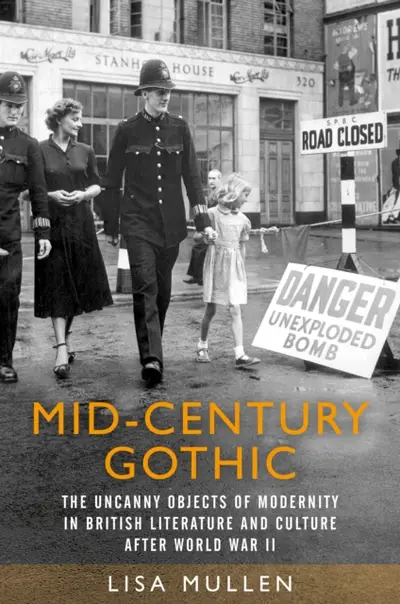
Mid-Century Gothic defines a distinct post-war literary and cultural moment in Britain, lasting ten years from 1945-55. This was a decade haunted by the trauma of fascism and war, but equally uneasy about the new norms of peacetime and the resurgence of commodity culture. As old assumptions about the primacy of the human subject became increasingly uneasy, culture answered with gothic narratives that reflected two troubling qualities of the new objects of modernity: their uncannily autonomous agency, and their disquieting intimacy with the reified human body. The book offers fresh readings of novels, plays, essays and films of the period, unearthing neglected texts as well as reassessing canonical works. By bringing these into dialogue with the mid-century architecture, exhibitions and material culture, it provides a new perspective on a notoriously neglected historical moment and challenges previous accounts of the supposed timidity of post-war culture.
Bibliographic data © Gardners Books Ltd.