EPUB · English
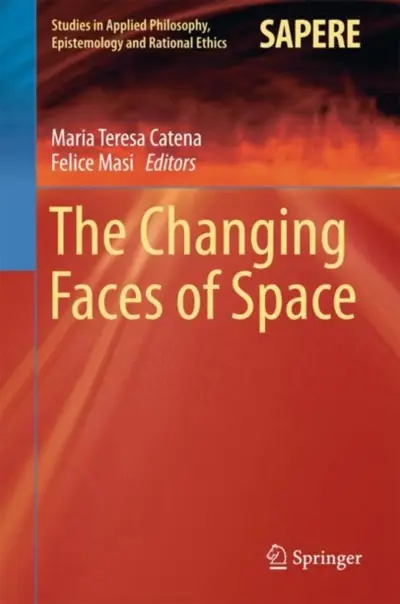
Changing Faces of Space
Price and availability
$120.99
Available in: Andorra, Austria, Australia, Belgium, Bulgaria, Canada, Switzerland, Cyprus, Czechia, Germany, Denmark, Estonia, Spain, Finland, France, United Kingdom, Guernsey, Greece, Croatia, Hungary, Ireland, Isle of Man, Iceland, Italy, Jersey, Japan, Liechtenstein, Lithuania, Luxembourg, Latvia, Monaco, Malta, Netherlands, Norway, Poland, Portugal, Romania, Sweden, Slovenia, Slovakia, San Marino, United States, Vatican City, South Africa
Stores: US, UK, Canada, EU, Australia.
Sign in to buyThe price is re-checked by the server before payment.
For personal use under the eBook licence.
- Format
- EPUB
- DRM
- Not stated by the publisher
- Language
- English
- Publisher
- Springer International Publishing
- Published
- 11 January 2018
- ISBN
- 9783319669113
- Subjects
- Philosophy: epistemology & theory of knowledge, Social & cultural anthropology, ethnography, Philosophy of science, Social and cultural anthropology, Philosophy of science, Philosophy: epistemology and theory of knowledge
About this book
This book focuses on various concepts of space and their historical evolution. In particular, it examines the variations that have modified the notions of place, orientation, distance, vacuum, limit, bound and boundary, form and figure, continuity and contingence, in order to show how spatial characteristics are decisive in a range of contexts: in the determination and comprehension of exteriority; in individuation and identification; in defining the meaning of nature and of the natural sciences; in aesthetical formations and representations; in determining the relationship between experience, behavior and environment; and in the construction of mental and social subjectivity. Accordingly, the book offers a comprehensive review of concepts of space as formulated by Kant, Husserl, Heidegger, Einstein, Heisenberg, Penrose and Thorne, subsequently comparing them to notions developed more recently, in the current age, which Foucault dubbed the age of space. The book is divided into four distinct yet deeply interconnected parts, which explore the space of life, the space of experience, the space of science and the space of the arts.
Bibliographic data © Gardners Books Ltd.